Mango Pulp Suppliers in India: A Buyer's Guide
Checked
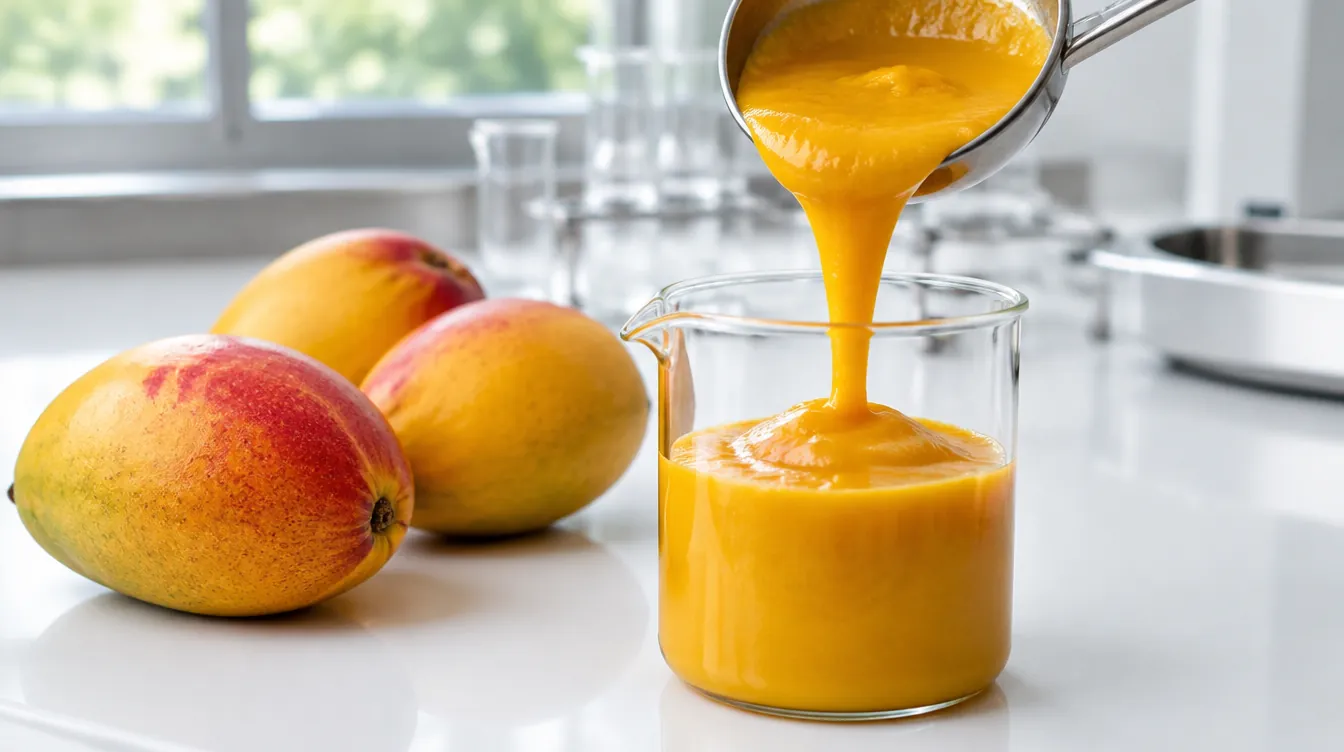
To choose between mango pulp suppliers in India, start with the variety, the specification and the pack, then check each lot on paper and in a sealed sample before you commit to a container. A good supplier will put brix, acidity, pH, microbiology and residue results on a certificate of analysis for the exact lot you buy, and will let you approve a sample that the shipment must match. This guide shows you what to ask for, what the Indian standard says, and where orders usually go wrong.
Where are India's mango pulp suppliers, and what do they pack?
Most Indian mango pulp is processed in two clusters. APEDA, India's agricultural export authority, names Chittoor in Andhra Pradesh and Krishnagiri in Tamil Nadu as the two main clusters, with around 65 processing units, and notes further units in Maharashtra and Gujarat. Mango pulp suppliers include processors in those clusters, traders who buy from them, and houses that source for you. Ask early which one you are speaking to, whose name is on the processing licence, and who will sign the certificate of analysis.
The trade is sizeable. According to APEDA, citing DGCIS data, India exported 62,864 tonnes of mango pulp worth USD 68.39 million in 2025-26, with the USA, the UK, Saudi Arabia, the Netherlands and Germany as the main destinations. That matters to you because a processor who already ships to your market will usually know its rules on residues, labelling and documents.
APEDA lists four named pulps: Alphonso, Totapuri, Neelum and Kesar. It also describes the usual process: fruit is ripened in chambers, washed, blanched, pulped, deseeded, centrifuged and homogenised, then thermally processed and aseptically filled, or canned and retorted, or pasteurised and frozen. Your specification should describe the result you need, not just the process name.
Alphonso, Kesar or Totapuri: which variety fits your product?
The variety sets much of the colour, aroma and sweetness of the pulp, and its price band. Many buyers default to Alphonso because the name is known, which is not always right for a formulation that must cost out at volume.
India's National Horticulture Board describes the three main processing varieties in its mango variety sheet. It lists Alphonso as grown in Maharashtra, Gujarat, Karnataka and Madhya Pradesh, good for pulping and canning, and notes that its flesh develops spongy tissue. It lists Kesar as a Gujarat variety, ideal for pulping and juice concentrates, and an early-season variety. It lists Totapuri (Bangalora) as grown in Andhra Pradesh, Karnataka and Tamil Nadu, a heavy and regular bearer used for processing.
Kesar from the Gir area carries a protected name. Gir Kesar mango is registered as a geographical indication in India's GI Registry (application 185). If a supplier offers "Gir Kesar" pulp, ask where the fruit was bought and how they can show it came from the registered area.
Totapuri is the volume variety of the south. A 2022 study from Acharya N.G. Ranga Agricultural University reports that about 86,000 hectares in Chittoor district grow Totapuri, which the industry mainly uses to make pulp. Ask whether a Totapuri quote is for pure Totapuri or a blend.
| Variety | Where it grows (NHB) | What NHB says about processing | What to check in your sample |
|---|---|---|---|
| Alphonso | Maharashtra, Gujarat, Karnataka, Madhya Pradesh | Good for pulping and canning; flesh develops spongy tissue | Ask how fruit with spongy tissue is sorted out before pulping; check aroma and colour against your reference |
| Kesar | Gujarat | Ideal for pulping and juice concentrates; early-season variety | Ask for the fruit's origin if "Gir Kesar" is claimed; check colour and sweetness against your target |
| Totapuri | Andhra Pradesh, Karnataka, Tamil Nadu | Used for processing; heavy and regular bearer | Check acidity and flavour against your formulation; ask whether it is sold pure or blended |
If you need a blend, write the variety ratio into the specification. Pulp sold as "mango pulp" with no variety named can be anything. Judge taste and colour against a retained reference from the last lot that worked in your product.
What should your specification say about brix, acidity and pH?
Your specification is the document every lot will be judged against. Start with the legal floor, then add your own ranges.
India's food regulator sets the floor. Under FSSAI regulation 2.3.11, unsweetened (natural) mango pulp must have total soluble solids of not less than 12.0 percent and sweetened pulp not less than 15.0 percent; nutritive sweeteners may not exceed 50 g per kg, and pulp with more than 15 g per kg must be described as sweetened. The same regulation sets acidity as citric acid at not less than 0.3 percent for sweetened canned mango pulp. For fruit pulps other than mango, such as guava, regulation 2.3.12 sets total soluble solids, exclusive of added sugar, at not less than 6.0 percent and acidity as citric acid at not less than 0.3 percent.
Brix is the trade word for the same reading. FSSAI's manual of methods for fruit and vegetable products measures soluble solids with a refractometer at 20 °C, with a temperature correction when the reading is taken at another temperature. Write "brix at 20 °C" in your specification so that two laboratories report the same thing.
Beyond the legal minimum, set ranges that suit your product. Agree these lines with your technologist before you ask for a quote:
| Parameter | What to write in the specification | Why it matters |
|---|---|---|
| Variety and origin | Named variety, or blend ratio; state or area of origin | Sets flavour, colour and price; stops silent substitution |
| Brix | Minimum and maximum, measured at 20 °C | Drives sweetness and how much pulp each batch needs |
| Acidity | Range, as percent citric acid | Balances flavour and affects how your product holds |
| pH | Maximum, and whether acid may be added | Governs process safety and, for some markets, how the pulp is regulated |
| Sweetened or natural | "Unsweetened, no added sugar" or the permitted sugar level | Changes the legal description and your own label |
| Single strength or concentrate | State which, with its brix range | Concentrate is diluted on use; mixing the two up breaks a recipe |
| Consistency and colour | Your method and range, limits on fibre and black specks, or match to retained reference | Affects pumping, mouthfeel and appearance |
| Microbiology | Limits and test methods (see the tests section) | Decides whether the lot is safe to use and to sell |
| Residues and contaminants | Destination market limits | A lot can be legal in India and fail at your border |
| Pack and shelf life | Pack type, net weight, storage condition, shelf life from pack date | Sets how you store and rotate stock |
One more line deserves care. If the processor adds citric acid to bring the pH down, ask how the pulp is classed in your market. In the United States, processors of acidified and low-acid canned foods must register with the FDA and file their process, and FDA Import Alert 99-37 allows detention of low-acid canned and acidified foods that lack a filed scheduled process. If you import into the US, ask the supplier which category their pulp falls in and, where it applies, for their registration and filing details before you place the order.
Aseptic drum or can: which pack suits your plant and your route?
Most industrial buyers take mango pulp in an aseptic bag inside a steel drum. Smaller users often buy cans. Frozen pulp needs a cold chain the whole way. APEDA describes all three routes: aseptic filling after thermal processing, canning with retorting, and pasteurising with deep freezing.
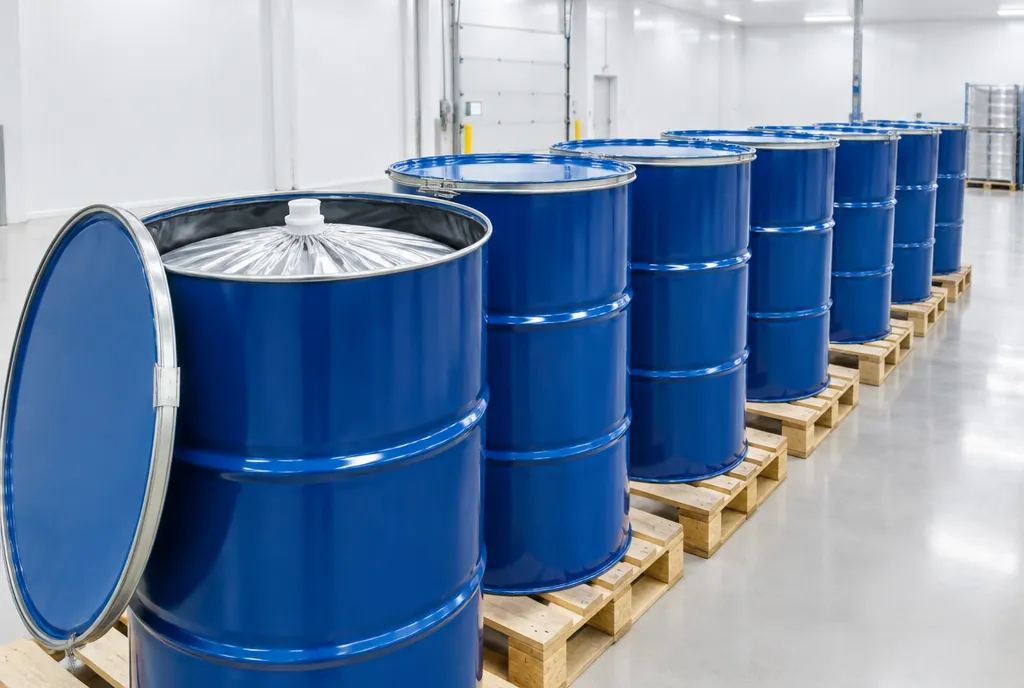
Aseptic drums and cans both ship at ambient temperature, with no refrigeration. Ask how the drums are stacked, whether pallets are treated for your country's rules, and what storage the supplier advises on arrival.
Choose the pack by how you use the pulp:
- Aseptic bag in drum. Suits plants that empty a drum quickly. Ask for net weight per drum, the bag specification and the spout type.
- Cans. Suit kitchens, bakeries and small batches. Ask for can size, lacquer, the seam check run, and cartons per pallet.
- Frozen. Only if your process needs it. Ask how the cold chain is recorded from plant to port.
Write the pack into the purchase order with the container loading you expect. Ask the supplier to confirm how many drums or cartons go into a 20 ft container for your pack, and to put that number on the proforma invoice.
When is mango pulp packed, and how does the crop affect your order?
Mango pulp is a seasonal product sold all year. Processors pack it during the harvest, then sell from stock until the next crop. That has three consequences for your order.
First, ask for the pack date and lot number on every quote. Two drums of the same variety from different weeks of the season can differ in colour and brix. If you need uniformity across a year's supply, ask whether the supplier can allocate your volume from a small number of lots.
Second, plan your contract before the season. The National Horticulture Board lists Kesar as an early-season variety, while Totapuri is grown at scale in the south. If the crop is short, the variety you want may be gone before you place your order. A supplier who books your volume before the harvest, against an agreed specification, is worth more to you than one who quotes the lowest figure from leftover stock.
Third, expect year-to-year variation. Set ranges wide enough for a normal year and tight enough to reject a lot that will not work for you. Ask for the new season's sample before you accept the first lot of a new crop.
Which tests should the certificate of analysis carry?
A certificate of analysis (COA) is only useful if it belongs to the lot you receive. Ask for one per lot, carrying the lot number printed on the drums or cartons, the pack date, the laboratory's name and the test methods used. A generic "typical analysis" sheet is a product description, not a certificate.
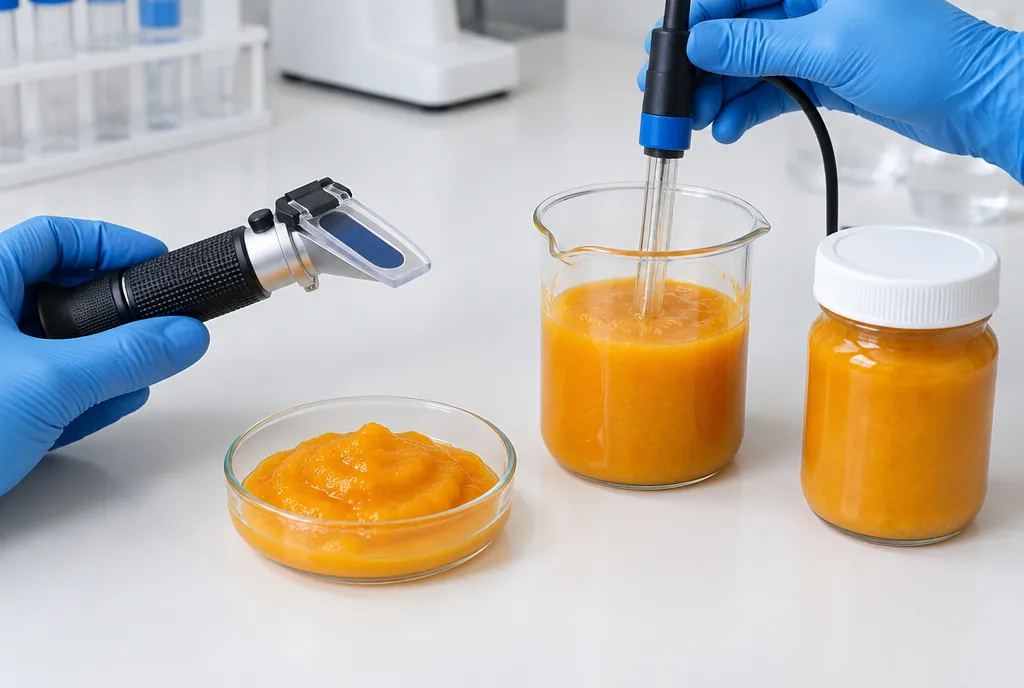
Group the tests in four sets:
- Composition. Brix at 20 °C, acidity as citric acid, pH, and any consistency, colour and speck counts you wrote into the specification.
- Microbiology. In India, FSSAI's microbiological standards for fruit and vegetable products set limits for thermally processed products on aerobic plate count, yeast and mould, Enterobacteriaceae and Staphylococcus aureus, alongside food safety criteria for pathogens. For aseptic and canned pulp, also ask for the commercial sterility or incubation check the processor runs on each lot. Your own market may set further limits.
- Pesticide residues. Test against the limits of the country where the product will be sold, not only against Indian law. The European Union publishes its maximum residue levels by product in the EU Pesticides Database, and Codex Alimentarius keeps an international database of pesticide residue limits. Ask which residues the laboratory screened for and at what limit of detection.
- Contaminants. Ask what your market requires, for example metals for canned products, and agree the list before the first order.
Ask who ran the tests. In India, NABL accredits testing laboratories; ask whether the laboratory on the certificate holds accreditation for the specific tests reported. Then compare the certificate with your own test of the arrival sample.
How do you approve a sample so the container matches it?
A pre-shipment sample is only as good as the link between it and the goods. Set the rules before anything moves.
- Ask for a sealed sample drawn from the actual lot. It should carry the lot number, pack date and a seal or tamper label that matches a photograph sent with it.
- Test it yourself or with your own laboratory. Judge it against your written specification and your retained reference sample.
- Approve in writing, by lot number. Your approval should name the lot, not just the product.
- Keep a counter-sample. Ask the supplier to keep an identical sealed sample from the same lot. If there is a dispute, both sides test the same material.
- Check on arrival. Open drums at random from different pallets, check the lot numbers against the approval, and test before you release the lot into production.
Agree in advance what happens if the arrival test fails: replacement, credit or return, and who pays freight.
Which shipping terms and documents should you agree?
The Incoterms rule on your contract decides who pays for each leg of the journey and where risk passes. The International Chamber of Commerce publishes the Incoterms rules, which set out the tasks, costs and risks between seller and buyer. Three terms are common for Indian pulp:
- FOB (Free on Board). The supplier delivers the container on board at the named Indian port. You arrange and pay for ocean freight and insurance.
- CFR or C&F (Cost and Freight). The supplier pays freight to your port. Risk still passes when the goods are on board in India, so arrange your own insurance.
- CIF (Cost, Insurance and Freight). As CFR, plus the supplier buys minimum insurance cover.
Name the port of loading in the contract. Pulp from the southern clusters and pulp from Gujarat may leave from different ports, and the port changes inland haulage and transit time, so get it in writing.
Agree the document set before you pay a deposit. Ask for a commercial invoice and packing list showing lot numbers per drum or carton, a certificate of origin, the lot's certificate of analysis, and any health or phytosanitary certificate your country requires for processed fruit. Ask for drafts before the container is loaded, so mistakes are corrected while the goods are still in India.
If your pulp goes into a retail pack in your market, check labelling early. Poorti's guide to food label requirements by export market covers the main rules for the US, EU, UK, UAE and India.
What are the red flags when you compare suppliers?
Most problems with mango pulp suppliers show up in the first few emails, if you know where to look. Treat any of these as a reason to slow down:
- The quote names no variety, or offers "Alphonso" at a price far below the others without explaining the blend.
- The specification sheet shows a single "typical" brix figure, with no range and no temperature.
- The supplier will send a sample but will not tie it to a lot number.
- The certificate of analysis has no laboratory name, no method and no lot number, or every lot shows identical numbers.
- The company that will invoice you differs from the name on the processing licence, and nobody explains why.
- The supplier cannot say which residue limits the pulp was tested against.
- Payment is asked for in full before you have approved a sample.
A checklist you can send to any supplier
Copy this list into your enquiry. A supplier who answers every line clearly is one you can compare fairly with the next.
- Variety, or blend ratio, and area of origin of the fruit
- Single strength or concentrate; sweetened or natural; acid added or not
- Brix range at 20 °C, acidity range as citric acid, maximum pH
- Consistency, colour, fibre and speck limits, with the methods used
- Microbiological limits and methods, the testing laboratory and its accreditation
- Pesticide residue screen, the destination limits used, and the limit of detection
- Pack type, net weight per unit, units per pallet and units per 20 ft container
- Shelf life, pack date and lot numbers for the stock offered
- Sealed pre-shipment sample from the actual lot, with a counter-sample kept
- Incoterms rule, port of loading and the document set, with drafts before loading
- For US buyers, the processor's FDA registration and process filing details where they apply
- Name of the company on the processing licence and the company that will invoice
- What happens if the arrival test fails: replacement, credit or return
How does Poorti handle a mango pulp order?
Poorti Mandalam LLP is a food house in Ahmedabad. It is not a manufacturer and owns no plant. It works through a circle of farmers, processors, manufacturers, testing laboratories and logistics partners across India, and holds them to one standard.
For mango pulp, the house supplies Kesar and Alphonso mango pulp and pink guava pulp, aseptic and shipped ambient, as listed on the fruit and fire-roasted pulps page. The Kesar comes off the Gir belt; you can see where the circle works in Gujarat, from Talala Gir to the mango and pulp country around Valsad, on the Gujarat page of the Circle. The full specification, including brix, pH, viscosity, microbiological limits, pack format and container loading, is issued on request.
The work follows the steps in this guide. You send the specification you buy to. The house sources against it through the circle, sends you a sealed sample, and issues a certificate of analysis for every lot. Orders are by the full container through the Source door, shipped FOB Mundra, CIF or C&F, in private-label or neutral packing.
If you already have a supplier and want to see the plant before you commit, the Verify inspection visits the maker, sees the line running, draws samples from live stock and writes a dated report against eight fixed checks. It records what was observed on the day. It is not a certification and not a guarantee of a future consignment.
Questions people ask
What brix should mango pulp have?
India's legal minimum for total soluble solids is 12.0 percent for unsweetened pulp and 15.0 percent for sweetened pulp, under FSSAI regulation 2.3.11. Above that floor, the right range depends on your product. Set a minimum and maximum at 20 °C with your technologist and write both into the specification.
Is Alphonso pulp better than Kesar pulp?
Neither is better in general. Alphonso is the better-known name; Kesar is described by the National Horticulture Board as ideal for pulping and juice concentrates. Judge both against your formulation, your cost per batch and your reference sample.
Does aseptic mango pulp need refrigeration in transit?
No. Aseptically filled pulp in drums, and canned pulp, ship at ambient temperature. Frozen pulp is the one form that needs a cold chain. Ask the supplier for storage advice once the drums are opened.
What should a mango pulp certificate of analysis include?
The lot number and pack date, brix at 20 °C, acidity, pH, your agreed physical checks, microbiological results, the residue screen and the limits used, the laboratory's name and the methods. It should match the lot printed on the drums you receive.
How do I check a mango pulp supplier in India before ordering?
Ask for the processing licence and match the name to the company that will invoice. Ask for a sealed sample from the actual lot and test it yourself. For a large or first order, have someone visit the plant while it is running and draw samples from live stock.
If you are comparing mango pulp suppliers now, send Poorti the product, the specification you buy to and your destination port at poorti.net/contact. If you are building a brand and want the product made under your own label, start at poorti.net/make.
Buying from India?
Send the product, the specification you buy to and the destination port, and the house will come back to you.
Send an enquiry