Food Exporters in India: How to Find and Vet One
Checked
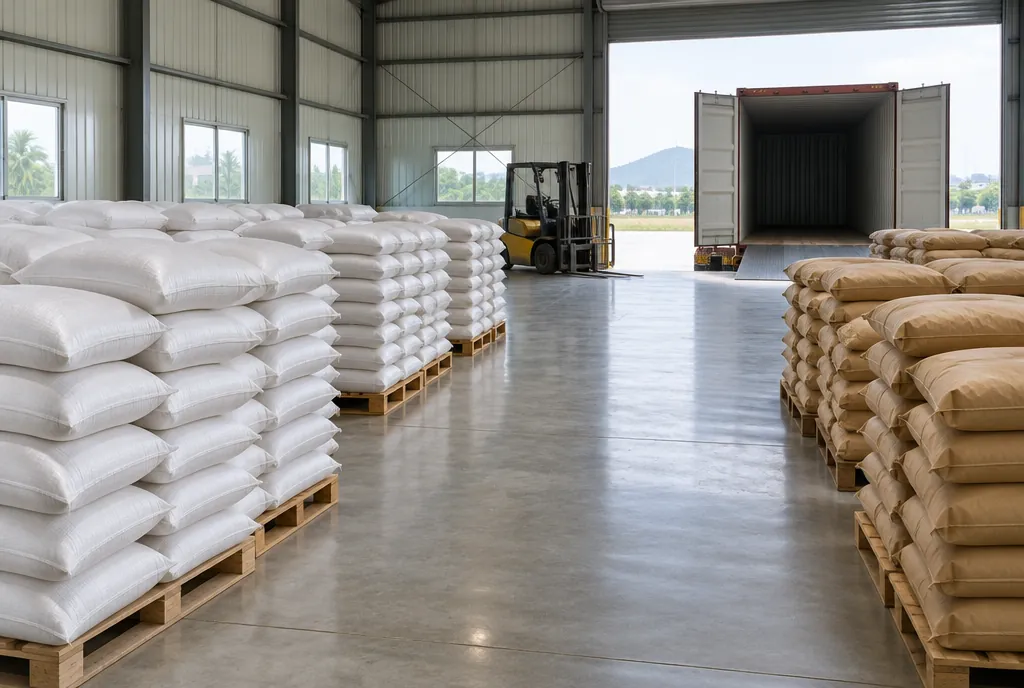
Finding food exporters in India is quick. Knowing which of them are genuine takes a few more checks, and you can make every one of them yourself on free government portals. A genuine exporter holds an Importer Exporter Code from DGFT, an FSSAI licence, and a registration with the right export body (APEDA or the Spices Board), and can show the certificates your market asks for before the container moves.
This guide is for importers, food manufacturers and brand owners abroad who buy from India. It names no exporter. It shows you how to find them, what each registration proves, how to check it, what to ask, and how to handle samples and inspection. It is written by Poorti Mandalam LLP, a food house in Ahmedabad that does this work for buyers through its circle of farmers, processors, manufacturers, testing laboratories and logistics partners.
What does India export most?
Start with the size of the trade, because it tells you how deep the supply is for your product. In 2024-25, India's agricultural exports were worth USD 51,913 million, and products under APEDA accounted for USD 28,601 million of that, according to APEDA's Annual Administrative Report 2024-25. APEDA is the Agricultural and Processed Food Products Export Development Authority, the government body that promotes and registers exporters of its scheduled products.
The table below lists the largest APEDA product lines that year, taken from the same report, which uses DGCIS trade data.
| APEDA product line | Exports 2024-25 (USD million) | Quantity (tonnes) |
|---|---|---|
| Non-basmati rice | 6,528 | 14,128,955 |
| Basmati rice | 5,944 | 6,065,456 |
| Buffalo meat | 4,061 | 1,254,922 |
| Miscellaneous processed items | 1,680 | Not stated |
| Fresh fruits | 1,171 | 1,591,850 |
| Processed fruits and juices | 1,029 | 738,076 |
| Cereal preparations | 934 | 594,536 |
| Fresh vegetables | 894 | 2,150,732 |
| Groundnut | 795 | 746,315 |
| Pulses | 778 | 730,731 |
| Processed vegetables | 777 | 550,420 |
| Dairy products | 721 | 217,017 |
Spices sit outside APEDA, under the Spices Board. In 2025-26 India exported 17.34 lakh tonnes (about 1.73 million tonnes) of spices and spice products worth USD 4,430.90 million, with chilli, cumin, and spice oils and oleoresins the largest contributors by value, according to the Spices Board's review of export performance.
Two points follow. First, for the large lines there are many exporters, so you can afford to be strict. Second, the product decides which export body the seller must be registered with, and which checks apply. Dehydrated onion, for example, is reported by APEDA among processed vegetables, while ginger and garlic are on the Spices Board's list of spices. If you buy those, Poorti's guides to dehydrated onion grades and dehydrated garlic grades explain the cuts and sizes you will be quoted.
Where do buyers find food exporters in India?
Most buyers find exporters through one of five routes. Each has a different strength, and none of them is a check on its own.
- Export promotion bodies. APEDA and the Spices Board promote registered exporters abroad, and the Spices Board, for example, takes registered exporters to international exhibitions. A seller you meet this way at least holds a registration with that body.
- International food trade fairs. You see the product, meet the people and compare several sellers in a day. A stand is paid for, so it shows budget, not standing.
- Online B2B directories and marketplaces. Fast and wide. Anyone can list, including traders who have never shipped the product. Treat a listing as a name to check, nothing more.
- Referrals from other buyers, freight forwarders and testing laboratories. Often the most reliable lead, because someone has seen the goods arrive.
- A sourcing house in India. A firm that matches your specification to makers it knows, checks them and stands behind the lot. This is the route Poorti offers through its Source door.
Whichever route you use, aim for a shortlist of two or three sellers who can make your exact specification. One seller gives you no comparison. Ten gives you more paperwork than you can check properly.
Which registrations does a genuine exporter hold?
Each registration comes from a different body and proves a different thing.
| Registration | Issued by | What it proves | Where you check it |
|---|---|---|---|
| Importer Exporter Code (IEC) | Directorate General of Foreign Trade (DGFT) | The firm may export at all. It is the firm's PAN, its tax identity. | DGFT portal, free, by IEC number and firm name |
| FSSAI licence | Food Safety and Standards Authority of India | The premises are licensed to handle food. Exporters fall under the central licence. | FoSCoS portal, FBO search |
| APEDA RCMC | APEDA, issued on the DGFT platform | The firm is registered to export APEDA scheduled products such as rice, processed vegetables, fruit pulps and dairy | Ask for a copy; the IEC and name on it must match |
| CRES | Spices Board | The firm is registered to export spices and spice products | Ask for a copy; confirm with the Spices Board if in doubt |
| EIC certification | Export Inspection Council, through its Export Inspection Agencies | A notified product, plant or consignment meets the export standard or the importing country's rules | The certificate travels with the consignment; the plant approval can be confirmed with EIC |
| Organic certificate (only if sold as organic) | A certification body accredited under India's National Programme for Organic Production | The product was produced, processed and packed to the NPOP standard | Ask for the scope certificate and the transaction certificate for your lot |
Under paragraph 2.05 of India's Foreign Trade Policy 2023, no one may export without an IEC, the IEC is the same as the firm's PAN, and it must be updated every year between April and June or it is de-activated. Under the APEDA Act, every person exporting a scheduled product must register with APEDA, and APEDA has issued its Registration-cum-Membership Certificate (RCMC) through the DGFT portal since 17 July 2023, as the APEDA annual report sets out.
For spices, the Spices Board says its Certificate of Registration as Exporter of Spices (CRES) is mandatory for the export of spices and spice products, and the Board covers 52 scheduled spices. Paragraph 2.57 of the Foreign Trade Policy treats a CRES as the RCMC for spices, so a spice exporter shows you a CRES, not a separate APEDA certificate.
For food safety, the FSSAI kind of business chart places exporters, both manufacturer exporters and merchant traders, under the central licence with no limit on capacity or turnover. The FSSAI licensing FAQ confirms that an exporter needs an FSSAI licence, that a licence number has 14 digits and starts with 1, and that a central licence starts with 100.
The Export Inspection Council, set up under the Export (Quality Control and Inspection) Act, 1963, certifies notified export commodities by consignment inspection, in-process control or food safety management system certification, and trading partners including the EU, USA and Japan recognise its official control, according to EIC's statement of its functions. Whether you need its certificate depends on the product and your market.
For organic goods, the APEDA report states that exports are certified only if produced, processed and packed to the National Programme for Organic Production standard.
How do you check each registration yourself?
Ask the seller for scans of every certificate in the table, then check them in this order. The government portals below are free to use.
1. The IEC on the DGFT portal
Open the View any IEC page on the DGFT portal. Enter the 10-character IEC and the firm's name as the seller gave it. Check three things: the status is active, the legal name matches the name on the quotation, and the address is a real business address. An IEC that is de-activated, or a name that differs from the one that will invoice you, is a reason to stop.
2. The FSSAI licence on FoSCoS
Go to the FoSCoS portal and use the FBO search. Enter the 14-digit number with no spaces. Read the result carefully: the business name, the premises address, the licence category, the kind of business and the status. For an exporter you expect a central licence covering export activity, at the address where the goods are made or stored. A real number can still belong to a different premises or a different firm, so match the name and address, not just the number.
3. The RCMC or CRES
Ask for the certificate and read the IEC printed on it. It must be the same IEC you checked on DGFT. Check the product category it covers and its validity. For spices, the CRES should name the seller as a merchant or manufacturer exporter, and the Spices Board requires registered exporters to file quarterly export returns, so a long-standing exporter should be able to tell you roughly where and how much it has shipped.
4. EIC and other certificates
If your market needs an EIC certificate, ask for a past one with the buyer's details masked, and the plant approval number if there is one. For organic, check that your product is listed on the scope certificate.
5. The laboratory behind the certificate of analysis
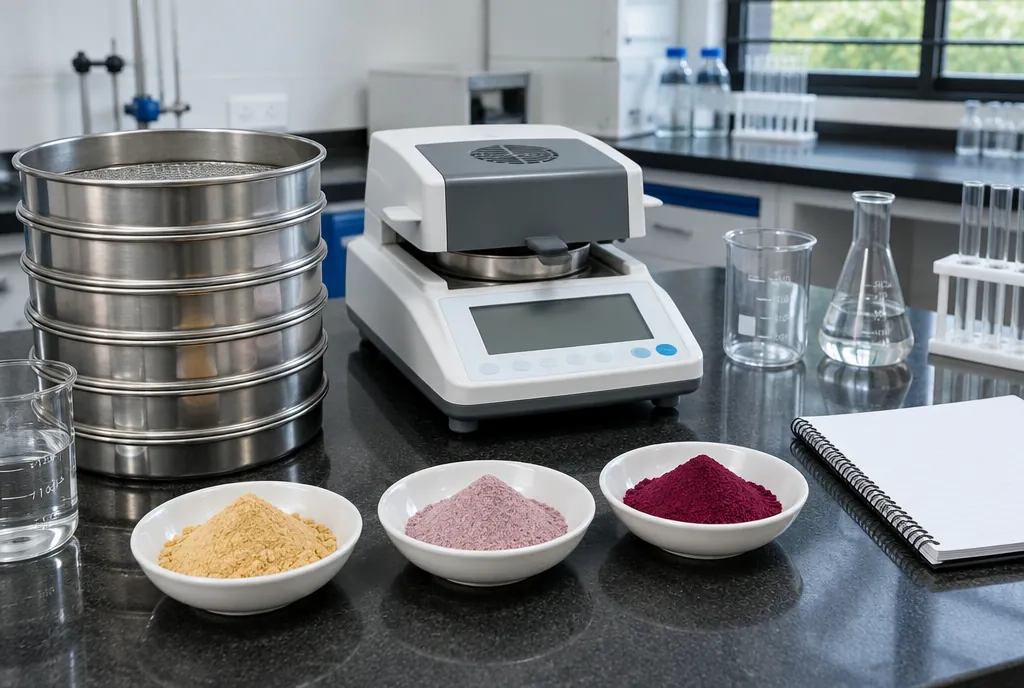
A certificate of analysis is only as good as the laboratory that signed it. Check that the laboratory is accredited for the tests it reports by searching it on the National Accreditation Board for Testing and Calibration Laboratories site. Accreditation covers specific tests, so a laboratory accredited for moisture may not be accredited for pesticide residues.
What should you ask an exporter before a sample?
Registrations show the firm may trade. These questions show whether it can make your product to your specification. Ask in writing and keep the answers.
- Are you the manufacturer, or a merchant exporter? Both are legal. If it is a merchant, ask who makes the goods and whether you may see that plant.
- Which address do the goods ship from? It should match the FSSAI licence you checked.
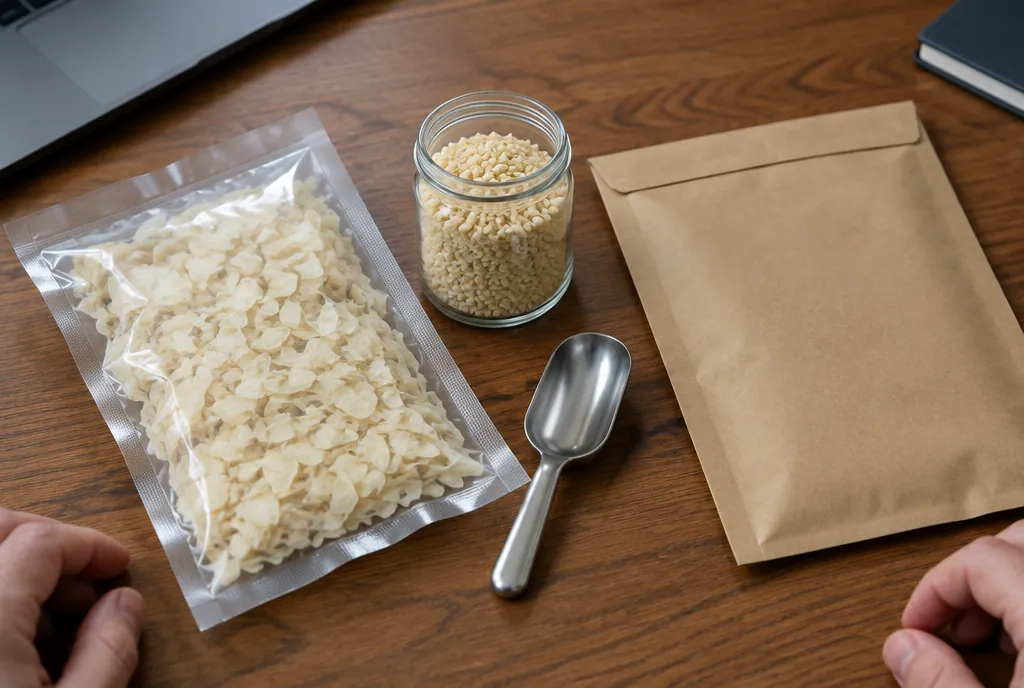
- What is your specification for this grade? Ask for particle size, moisture, colour, microbiological limits and any residue limits in writing. Compare it with the one you buy to.
- Which laboratory tests each lot, and for what? Ask for a recent certificate of analysis for the same grade.
- How is it packed? Bag type, liner, net weight per bag, bags per container, and whether you can have your own brand or neutral packing.
- Which shipping terms do you quote? FOB, CIF or C&F, and from which port.
- Which documents travel with the container? Commercial invoice, packing list, bill of lading, certificate of origin, health or phytosanitary certificate where your market needs one, and the certificate of analysis for the lot.
- What happens if a lot fails the specification? You want a written remedy.
India's Foreign Trade Policy lists the bill of lading, the commercial invoice cum packing list and the shipping bill as the mandatory documents for any export from India. Everything else depends on the product and the market. Poorti's guide to importing food from India works through your side of the rules, market by market.
How should samples and lab tests work?
Handle the sample as a contract step, not a courtesy.
- Send your specification first. A sample made to the seller's standard grade tells you little about the lot made to yours.
- Ask for a sealed sample. Two or three identical packs, sealed and marked with the same reference. You keep one sealed as the reference sample for the contract, and test another.
- Test it yourself. Send one pack to a laboratory you choose, for the parameters that matter most to your use. Compare the result with the seller's certificate of analysis.
- Write the result into the contract. The sealed reference sample and the agreed specification become the standard every lot is judged against.
- Ask for a certificate of analysis for every lot, from the same laboratory, testing the same parameters, with the lot number printed on the bags.
For spices, check whether your product falls under the Spices Board's mandatory sampling and testing before shipment. The Board's FAQ explains how an exporter checks this and how pre-shipment sampling is booked. A seller who does not know whether it applies to the product you are buying has probably not shipped it before.
When is a factory inspection worth it?
Paperwork shows that a firm is allowed to trade. It does not show the line, the storage or the packing area. An inspection is worth the cost when any of these is true:
- it is your first order with this seller;
- the seller is a merchant exporter and you have not seen the plant that makes the goods;
- your product has a tight specification, such as a mesh size or a moisture limit, where small process changes show;
- you are buying under your own brand, where a fault carries your name.
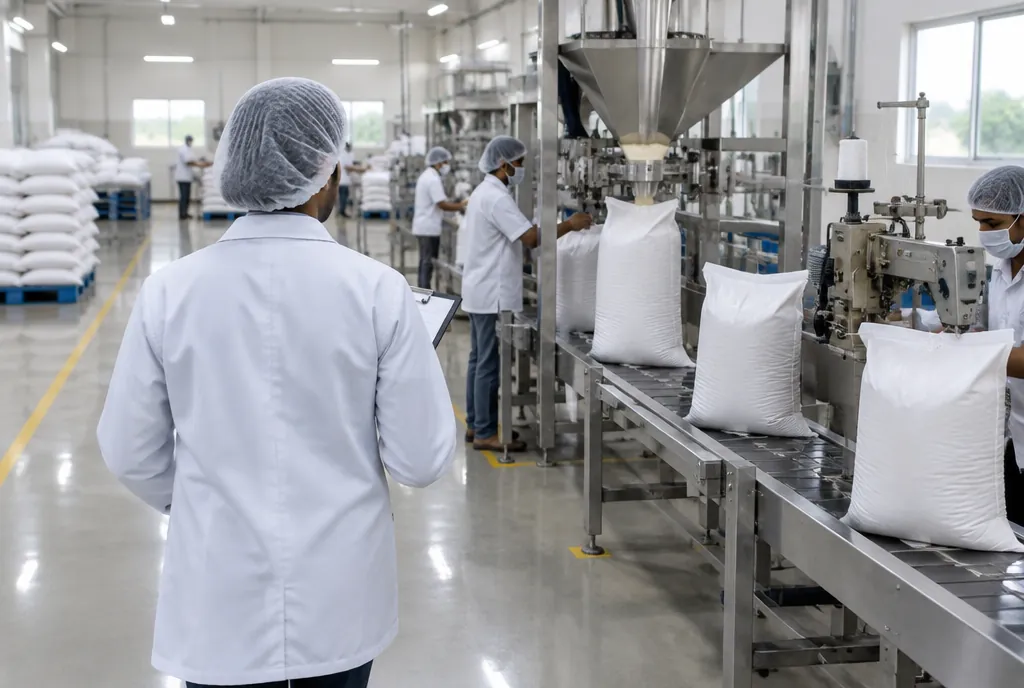
A useful inspection covers the same points every time, so that one visit can be compared with the next. At minimum: the licence on the wall matched to the firm that will invoice you, the line running on the day, storage and pest control, the packing area, the capacity claimed set against what you can see, samples drawn from live stock rather than from a sample cupboard, dated photographs, and the firm's recent export history. These are the eight checks in Poorti's factory inspection for buyers abroad.
Be clear about what an inspection is not. It records what was seen on one date against the specification you supplied. It is not a laboratory analysis, not a certification and not a guarantee of a future consignment.
What are the warning signs?
Each of these signs is worth stopping for before any money moves.
- The name on the IEC, the FSSAI licence and the proforma invoice are not the same.
- The FSSAI licence is a state licence or a basic registration, or it is for a different address from the one the goods ship from.
- The IEC shows as de-activated on DGFT.
- The seller will not share certificate numbers until you pay a deposit.
- The price is well below what other registered exporters quote for the same grade, with no reason given.
- Samples arrive without a reference, in a different grade from the one quoted, or with a certificate of analysis that has no laboratory name or lot number.
- The seller claims organic, or a certification your market needs, but cannot produce the certificate.
- Payment is requested to a bank account in a name other than the firm on the IEC.
- The seller resists an inspection, or will only show an office and a sample room.
One flag may have an innocent explanation; ask in writing. Two or more together are a reason to move on.
A vetting checklist you can use
Copy this into your purchase file and tick each line before you sign.
- IEC checked on DGFT: active, name and address match the seller.
- FSSAI licence checked on FoSCoS: central licence, kind of business covers export, address matches the despatch address.
- APEDA RCMC or Spices Board CRES seen: IEC on it matches, product category covers your product, valid.
- EIC certificate or plant approval confirmed, if your product and market need one.
- Organic scope certificate seen and your product listed, if sold as organic.
- Seller's written specification compared with yours, line by line.
- Recent certificate of analysis for the same grade seen, laboratory accreditation checked on NABL.
- Sealed reference sample received, one pack tested at a laboratory of your choice.
- Your own import rules checked for this exact product, including label and any prior notice.
- Packing agreed: bag type, net weight, bags per container, marks, brand or neutral.
- Shipping term agreed: FOB, CIF or C&F, and the port.
- Document list agreed and written into the contract.
- Remedy for an out-of-specification lot written into the contract.
- Factory inspection done, or a written reason for not doing one.
- Bank account name matches the firm on the IEC.
If you plan to sell under your own brand, the same checks apply, with the label and the pack added. Poorti's guide to private-label food manufacturing in India covers that route, and the food label requirements guide covers what the pack must say in the main export markets.
How does Poorti handle this for buyers?
Poorti is a food house, not a manufacturer, and it owns no plant. It works through a circle of farmers, processors, manufacturers, testing laboratories and logistics partners across India, and holds all of them to one standard: "We put our name on what we checked."
For a buyer, that means one house does the work in this guide. Through the Source door you buy by the container, with shipment FOB Mundra, CIF or C&F, in private-label or neutral packing. The range includes dehydrated onion (white, red and pink, crispy fried and toasted, from kibbled 8-20 mm to powder at 80-100 mesh), dehydrated garlic, dried ginger, potato flakes and flour, fire-roasted aubergine, capsicum and tomato pulp, mango and guava pulp, and carrot, beetroot and fruit powders. A sealed sample comes before production, and every lot ships with a certificate of analysis.
If you have already found a seller and want it checked, the Verify inspection visits the factory against the eight checks above and gives you a written report with dated photographs and a plain verdict. Brand founders who want a product made under their own label start at Make, which runs in six steps: brief, sealed sample, brand and pack, produce, certificate of analysis for every lot, and dispatch.
Questions people ask
Is an IEC enough to prove an Indian food exporter is genuine?
No. The IEC shows only that a firm may export. You also need the FSSAI licence and the APEDA RCMC or Spices Board CRES for the product.
Does every food exporter in India need an FSSAI licence?
Yes. FSSAI's licensing FAQ says an exporter needs a licence, and its kind of business chart puts exporters under the central licence. Check the number and address on FoSCoS.
What is the difference between an RCMC and a CRES?
An RCMC is a registration with an export body; APEDA issues one for its scheduled products. A CRES is the Spices Board's registration for spice exporters, and the Foreign Trade Policy treats it as the RCMC for spices.
Can I buy from a merchant exporter rather than a manufacturer?
Yes. Merchant exporters need the same registrations. Ask who makes the goods, check that maker's FSSAI licence too, and inspect the plant, not the office.
Do I need an EIC certificate for my shipment?
It depends on the product and your country's import rules. Ask your own regulator first, then ask the seller for a past certificate for the same product and market.
How many exporters should I compare before ordering?
Two or three who can make your exact specification. Check each with the same checklist and test the sealed samples side by side.
If you are buying from India, send Poorti the product, the specification you buy to and the destination port at poorti.net/contact, whether it is dehydrated onion or another line in the range. If you are a brand founder, start at poorti.net/make.
Buying from India?
Send the product, the specification you buy to and the destination port, and the house will come back to you.
Send an enquiry