Onion Powder Suppliers in India: A Buyer's Guide
Checked
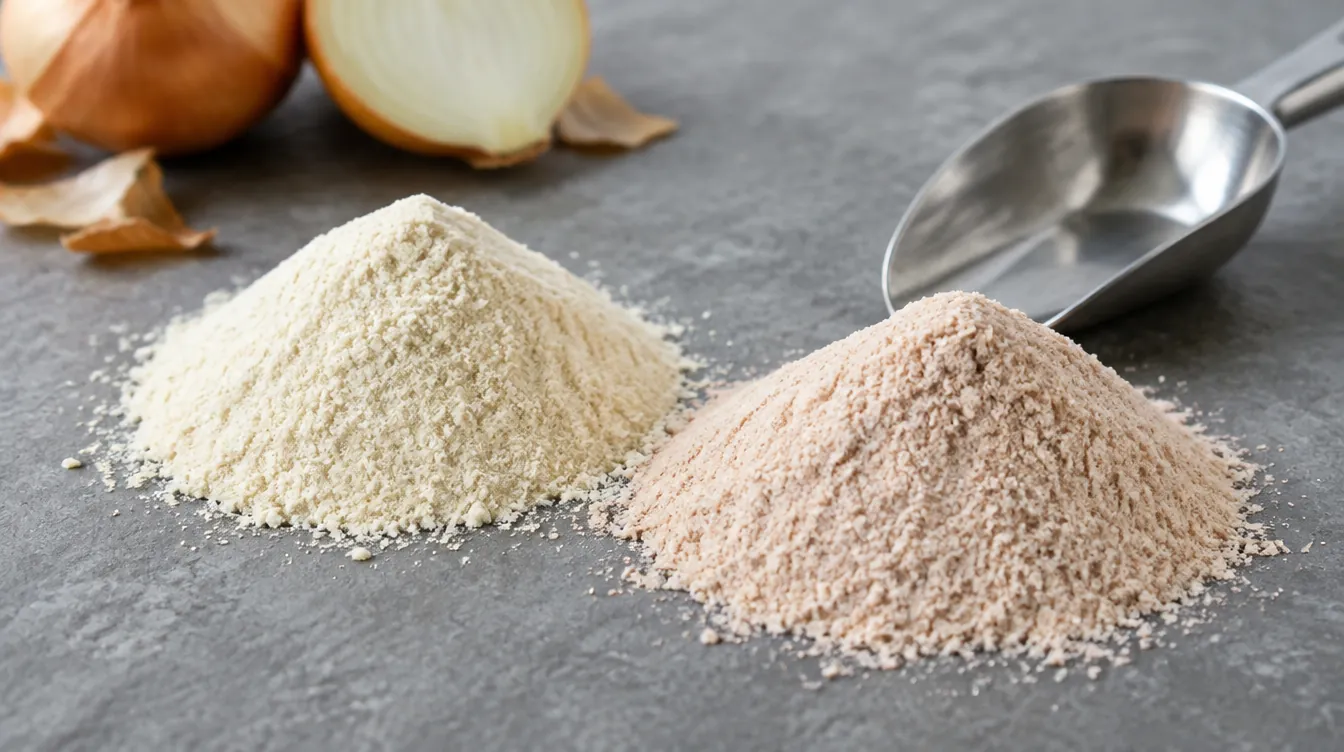
The onion powder suppliers worth shortlisting in India are the ones who will put a written specification, a sealed reference sample and a certificate of analysis for every lot behind what they ship. Before you compare offers, decide on colour (white or red and pink), mesh, moisture, microbiology and packing, and name a test method for each. This guide shows you what to ask for, which documents to check, and how to approve a sample before a container is loaded.
Most listings give a mesh range, a moisture figure and a bag size. Two powders sold on those same three lines can still differ in colour, flavour, microbiology and how they behave in your blend.
What exactly are you buying when you buy onion powder?
Onion powder is the finest grade of dehydrated onion. The Indian standard defines it as dehydrated onion ground to a free-flowing powder, 99 percent of which passes a 500-micron sieve (BIS, IS 4452:2009).
Two reference documents sit behind most onion powder specifications. In India, it is IS 4452:2009, which the Bureau of Indian Standards revised to align with the international standard ISO 5559, Dehydrated onion, specification. In the United States and for many international buyers, it is the official standards and methods manual of the American Dehydrated Onion and Garlic Association (ADOGA). Ask which one the supplier's certificate of analysis follows.
For customs, dried onion falls under HS 0712.20, and heading 0712 covers dried vegetables that are whole, cut, sliced, broken or in powder, but not further prepared (US Federal Register, 2021). Powder blended with salt was classified elsewhere, so confirm the code with your customs broker if anything is added.
To choose between powder, granules, minced or chopped onion, read the dehydrated onion grades guide. For how much powder replaces fresh onion, see the onion powder conversion guide.
White or red onion powder: which do you need?
Start with colour, because it decides which onion goes into the dryer. White onion is the usual raw material for dehydration. Researchers at ICAR-IARI note that white-fleshed onions are preferred for drying because they resist discolouration and bitterness (ICAR-IARI, Indian Horticulture, 2024). ADOGA states that the American dehydrated onions meeting its standards are made from white varieties (ADOGA).
The same article puts the requirement for drying onions at total soluble solids of 15 to 20 percent or more. Ask the supplier which variety and season the lot comes from.
Red or pink onion powder is bought for a different reason. It gives a pinkish tint and a sharper note where the colour of the onion should show in the finished product. Ask how the supplier holds colour steady from lot to lot. If colour matters, ask for colour to be measured and reported on the certificate, not judged by eye.
| Question | White onion powder | Red or pink onion powder |
|---|---|---|
| Typical use | Seasonings, soups, sauces, dry mixes, ready meals where onion flavour matters more than colour | Products where a pink tint or a sharper onion note is wanted |
| Colour of the powder | Off-white to pale cream | Pinkish beige to light brown |
| What to specify | Extractable colour by a named method, plus flavour against a reference sample | Colour range agreed against the sealed sample, plus flavour |
| Main risk | Browning from poor raw material or overheating in the dryer | Colour drifting between lots |
What mesh size should you ask for?
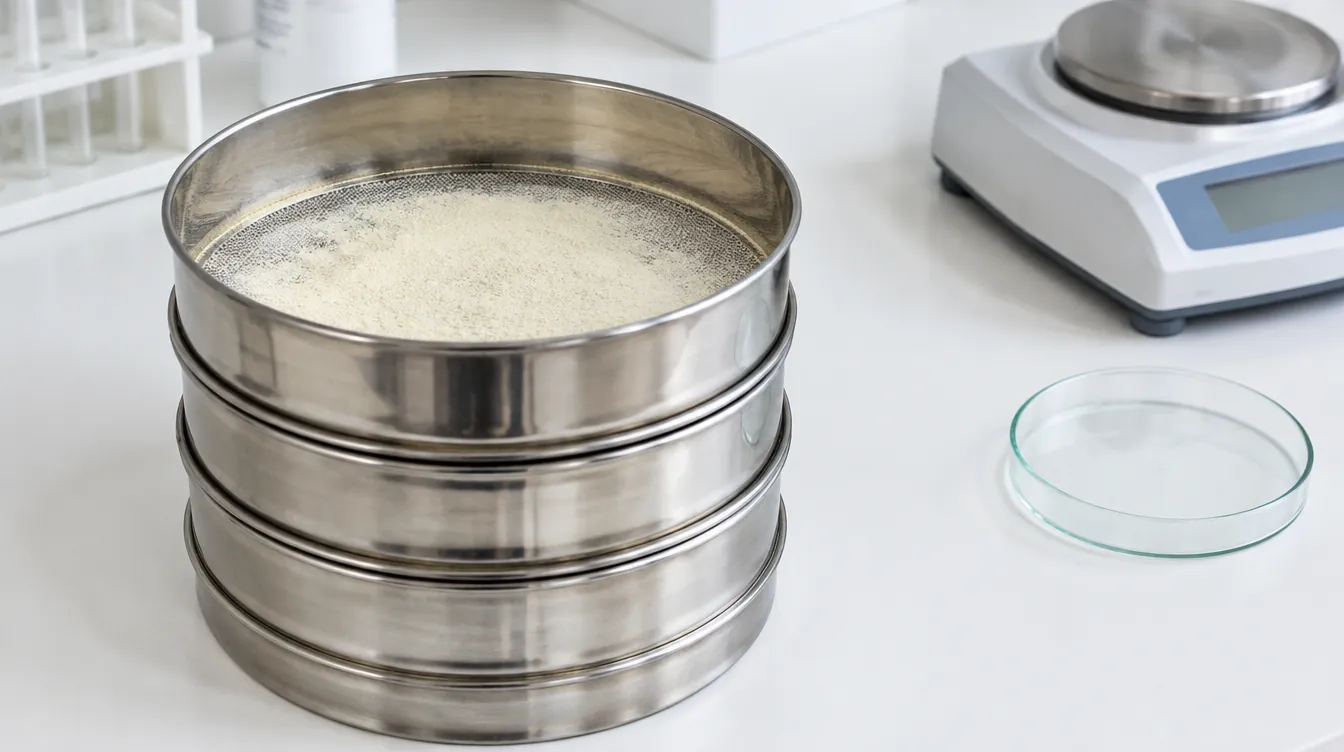
Mesh counts the openings per linear inch of a sieve, so a higher mesh number means a finer powder. Offers are usually written in mesh, while the Indian standard writes its fineness rule in microns.
Write the mesh requirement in three parts: the sieve, the percentage that must pass, and the test method. "80-100 mesh" alone does not say whether 99 or 90 percent must pass, or which sieve series is used.
Choose the mesh by what the powder has to do. A coarser powder flows better and dusts less. A finer powder disperses faster and leaves no specks, but can cake more easily. ADOGA does not recommend bulk index ranges for powders, because density, trapped air, particle shape and moisture all change how they settle (ADOGA). So dose by weight, not by scoop, and check flow in your own line with the sample.
For reference, Poorti offers its onion powder at 80 to 100 mesh, in white and in red and pink, set to the order. Poorti is a food house in Ahmedabad that sources through a circle of processors and laboratories rather than a plant of its own. See dehydrated onion on the ingredients range for the other cuts, from kibbled 8 to 20 mm down to granules.
Which limits belong in your specification?
Specify moisture, ash, acid-insoluble ash, extraneous matter, colour, heavy metals, microbiology, sulphite and anti-caking agent, and name the test method for each. The published reference points below give you a starting line. Your own specification can be tighter.
| Parameter | Published reference limit | Source |
|---|---|---|
| Fineness | 99% through a 500-micron sieve | IS 4452:2009 |
| Moisture | 6.0% max (IS 4452); 5.5% max (ADOGA) | IS 4452; ADOGA |
| Total ash | 5.0% max | IS 4452:2009 |
| Acid-insoluble ash | 0.5% max (a higher limit applies where an anti-caking agent is present) | IS 4452:2009 |
| Extraneous matter, including dark pieces, skin and root base | 0.5% max by weight | IS 4452:2009 |
| Hot water insoluble solids | 20% max; 30% max for standard grade powder | ADOGA |
| Extractable colour (optical index) | 105 max for fancy powdered and granulated | ADOGA |
| Lead | 100 ppb max | ADOGA |
| Added sulphite | 10 ppm max by an added-sulphite method | ADOGA |
| Anti-caking agent | Up to 2%, onion powder only, from a listed set | IS 4452:2009 |
Moisture deserves extra attention with powder. IS 4452 warns that onion powder is extremely hygroscopic and takes up moisture from the air even at low relative humidity (BIS, IS 4452:2009). Ask for moisture at packing on the certificate, and test again on arrival.
The Indian standard asks for a marked pungent flavour characteristic of the variety, free from off flavours, foreign odour, rancidity and mustiness (IS 4452:2009). The sealed reference sample is how you hold a supplier to it.
How should you handle microbiology and allergens?
Ask for microbiology by named method and know which results carry the weight. ADOGA notes that onions grow in soil, so bacteria are expected, and that aerobic plate count and yeast and mould counts are not food-safety indicators on their own (ADOGA). Keep limits for them as hygiene checks, but set pass or fail on the pathogens.
Salmonella is the test most buyers put first. A draft standard from the Rwanda Standards Board, written with reference to ISO 5559, requires Salmonella to be absent in 25 g of processed onion (RSB, DRS 602:2025). Check the limit your own regulator applies, and whether your product is cooked after the powder goes in.
Allergen control is the item buyers most often leave out. ADOGA recommends peanut allergen testing on every lot of internationally sourced onion, because peanut is often rotated through the same fields and harvest sacks are reused (ADOGA). Ask what else is ground on the same line.
Does onion powder contain sulphite, and how do you check?
It should not have sulphite added, but you should check rather than assume. ADOGA does not recommend added sulphites, and warns that the common Monier-Williams test reports onion's own sulphur compounds as sulphite (ADOGA).
IS 4452 requires dehydrated onion to be free from preservatives and bleaching substances (IS 4452:2009). Even so, some published drying trials pretreat onion slices with potassium metabisulphite (Plant Archives, 2023). Ask for two things: a written declaration that no sulphite was added, and a result by an added-sulphite method.
The labelling stakes are real. In the United States, sulphiting agents present at 10 ppm or more in the finished food must be declared on the label (21 CFR 101.100). In the European Union, sulphur dioxide and sulphites at more than 10 mg/kg are listed among the allergens that must be emphasised on the label (Regulation (EU) No 1169/2011, Annex II). See the food label requirements guide.
Should you accept an anti-caking agent?
Only if your product and your label can carry it, and only if it is declared. IS 4452 allows anti-caking agents in onion powder only, up to 2 percent, from a listed set: carbonates and phosphates of calcium and magnesium, certain silicates or silicon dioxide, and certain myristates, palmitates or stearates (IS 4452:2009). The same standard raises the acid-insoluble ash limit when an anti-caking agent is present, so the two must be read together.
An anti-caking agent changes your ingredient list. Write "no added anti-caking agent" or the exact agent and maximum level into the specification, and ask for it on the certificate of every lot.
Which documents should an Indian supplier show you?
Ask for these before you discuss price, and check each with the body that issues it.
| Document | What it shows | Issued by |
|---|---|---|
| Importer-Exporter Code (IEC) | The firm is allowed to export. India's Directorate General of Foreign Trade states that no export or import may be made without one unless specifically exempted | DGFT |
| FSSAI licence | The food business is licensed. FSSAI's licensing FAQ says exporters must hold a licence and that export units apply for a Central licence | FSSAI |
| APEDA RCMC, where the product is on APEDA's schedule | Registration with the export development authority for scheduled agricultural and processed foods | APEDA |
| Phytosanitary certificate, if your country asks for one | Plant health certification in line with the importing country's requirements | Directorate of PPQS |
| Certificate of analysis for the lot | Results for your specification, by named method, for the lot number on the bags | The supplier, from its own or an outside laboratory |
| Certificate of origin, commercial invoice, packing list, bill of lading | The trade documents your customs broker and bank need | Exporter, chamber or authorised body, shipping line |
Read the certificate of analysis with care. It should name the laboratory, the lot number, the date of sampling and the method for every result. If the results come from an outside laboratory, ask whether it holds accreditation for those tests.
How should sample approval work?
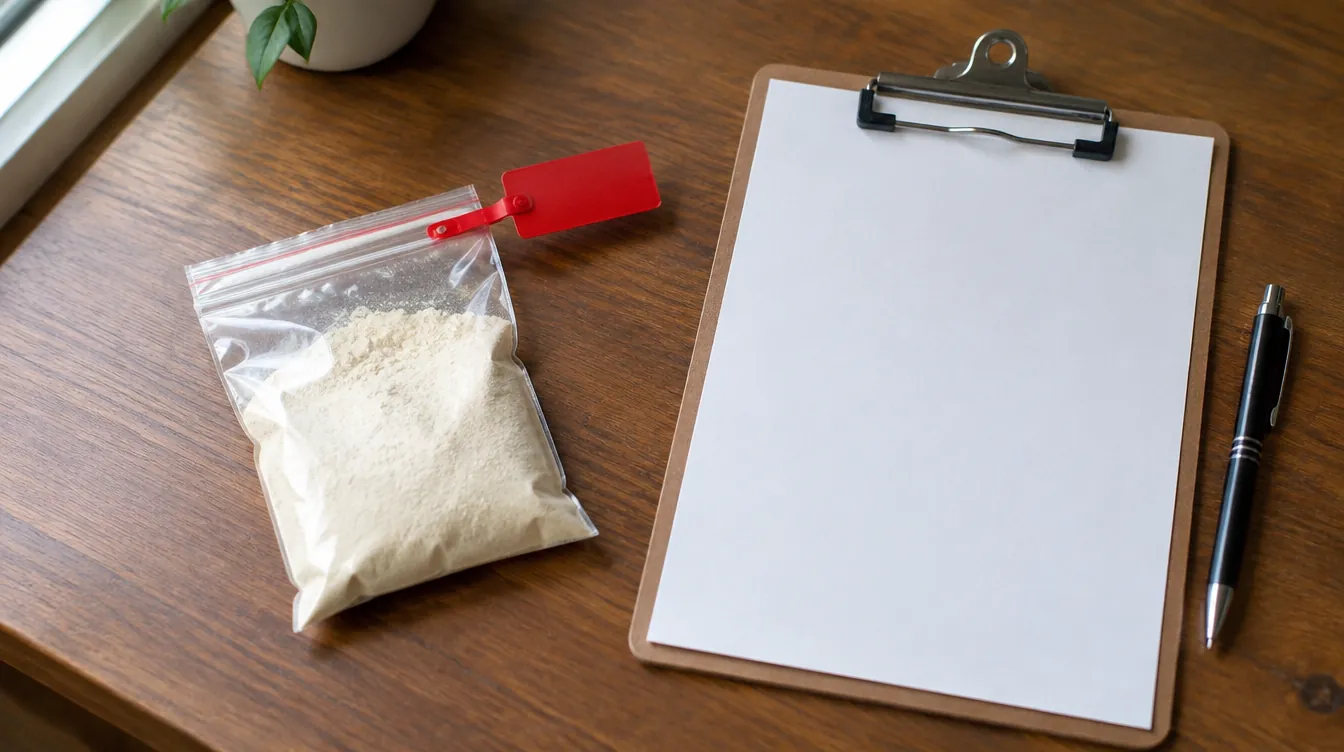
Approve a sample from the same source and process that will fill your order, then seal it. Later lots are judged against it for colour, aroma and flow.
- Send your specification first, so the sample is drawn to it, not picked from stock.
- Ask for a pre-shipment sample with its own certificate of analysis and lot number.
- Test it in your own product: flavour at your dose, colour in the finished food, flow through your feeders.
- Send a portion to your own laboratory for moisture, microbiology and added sulphite.
- Seal two portions on approval, one for each side, and record the seal number in the contract.
- For each shipment, compare a lot sample drawn before loading against the sealed reference.
Without a sealed sample, any dispute about colour or flavour comes down to memory.
How should onion powder be packed for export?
Pack for moisture first. IS 4452 asks that dehydrated onion be packed in clean, sound containers that protect it from the uptake of moisture and the loss of flavour through permeation (IS 4452:2009). ADOGA expects packaging with a moisture barrier to hold quality for at least two years in cool, dry storage (ADOGA).
Ask the supplier to state, in writing:
- The outer bag or carton, the inner liner and its thickness, and how the liner is closed.
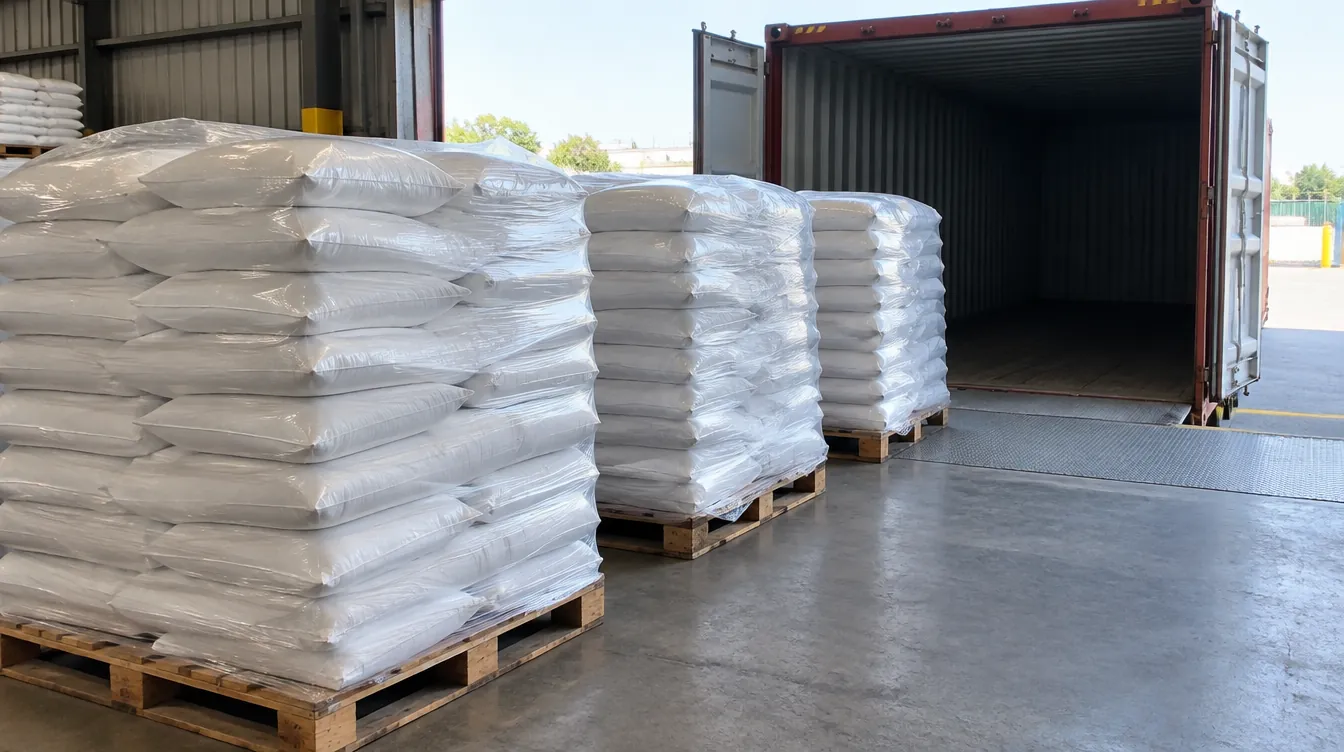
- Net weight per pack, and packs per pallet and per container.
- The marking on each pack: product, lot number, packing date, best before date and net weight. IS 4452 lists these particulars for each container (IS 4452:2009).
- How pallets are wrapped, and whether desiccant or container liners are used at sea.
- Whether packing is neutral, under the supplier's mark, or under your own label.
Agree the pack format at the sample stage, so the sample travels in the same pack as the order.
FOB, CIF or C&F: which shipping term suits you?
The Incoterms rule in your contract decides who books the ship, who pays freight and insurance, and when risk passes to you. Use the current International Chamber of Commerce rules and name the port.
- FOB (Free on Board). The seller clears the goods for export and loads them. The ICC explains that under FOB the risk passes to the buyer once the goods are on board the vessel at the named port (ICC Academy). You book and pay the main freight.
- CFR, often written C&F (Cost and Freight). The seller pays freight to your port, but risk still passes when the goods are placed on board at the port of shipment, and the seller owes no insurance (ICC Academy). Arrange your own cargo insurance.
- CIF (Cost, Insurance and Freight). As CFR, plus the seller buys insurance for you. The ICC notes the seller may choose the limited Institute Cargo Clauses (C) cover unless the contract says otherwise (ICC Academy), so state the cover you want.
Poorti ships FOB Mundra, CIF or C&F, so you can choose the term that matches how you already move freight.
What are the red flags when you compare suppliers?
- A price before any question about your specification, colour, mesh or destination.
- A certificate of analysis with no methods, no laboratory name or no lot number, or the same certificate sent for every lot.
- No answer on added sulphite or anti-caking agent, or "not applicable" where you asked for a result.
- Reluctance to seal a reference sample, or a sample that arrives in a different pack from the one offered.
- No IEC, or an FSSAI licence that does not match the name and address on the invoice.
None of these proves a supplier is unreliable. Each is a reason to ask again.
A checklist you can send to any supplier
Copy this list into your enquiry and ask for written answers.
- Product: onion powder, white or red and pink, single ingredient or with a named anti-caking agent and its maximum level.
- Fineness: mesh, sieve standard, minimum percentage passing, and test method.
- Moisture at packing, total ash, acid-insoluble ash and extraneous matter, each with a limit and method.
- Colour and flavour: method and limit, or agreement against the sealed sample.
- Microbiology: Salmonella and any other pathogens your market requires, plus plate count and yeast and mould for hygiene, each by named method.
- Added sulphite by an added-sulphite method, with a no-added-sulphite declaration.
- Heavy metals, including lead, by named method.
- Peanut allergen test per lot, and a list of other products handled on the same line.
- Certificate of analysis for every lot, with laboratory, lot number and sampling date.
- IEC, FSSAI licence, and APEDA RCMC where it applies.
- Packing: outer pack, liner, net weight, marking, palletising, packs per container.
- Sample: pre-shipment sample with its own certificate, sealed reference kept by both sides.
- Shipping term and named port, with who arranges insurance.
- Right to inspect the facility and the lot before loading.
What does Poorti Mandalam LLP do for an onion powder buyer?
Poorti owns no plant. It works through a circle of farmers, processors, manufacturers, testing laboratories and logistics partners across India, and holds them to one standard.
For onion powder, the house works from your brief: colour, mesh, the limits you buy to and the destination port. It sources through its circle against that specification, sends a sample and seals the approved reference. Every lot ships with a certificate of analysis. The onion line covers white and red and pink onion, from kibbled pieces to powder at 80 to 100 mesh, with private-label or neutral packing, shipped FOB Mundra, CIF or C&F. See the Source page for the full container offer.
If you already buy from an Indian supplier and want the facility checked before you commit, Poorti's Verify door offers factory inspection for overseas buyers.
Questions people ask
What mesh is onion powder usually sold in?
Offers vary from supplier to supplier, and Poorti offers 80 to 100 mesh. The Indian standard sets a looser floor: 99 percent through a 500-micron sieve. Write the sieve, percentage passing and method into the contract.
Is white onion powder better than red onion powder?
Neither is better in general. White onion is the usual choice for dehydration because white-fleshed onions resist discolouration and bitterness during drying, according to ICAR-IARI. Red or pink powder is chosen where a pink tint or sharper flavour should show in the product.
How much moisture should onion powder have?
IS 4452 sets 6.0 percent as the maximum and ADOGA sets 5.5 percent. Test again on arrival, because the powder takes up moisture from the air.
Can onion powder contain an anti-caking agent?
Under IS 4452, onion powder may carry up to 2 percent of a listed anti-caking agent, such as silicon dioxide or calcium phosphate. It must then appear on your ingredient list. If you want a single-ingredient powder, say so in the specification.
What HS code covers onion powder?
Dried onion, including powder that is not further prepared, falls under HS 0712.20. Powder blended with salt or other ingredients can be classified elsewhere, so confirm the code with your customs broker.
Do I need to visit the factory before I buy?
Not always. A sealed sample, a certificate of analysis for every lot and a factory inspection before loading give you much of what a visit would. Poorti's Verify door offers factory inspection for overseas buyers.
To start, send the product, the specification you buy to and the destination port to Poorti at poorti.net/contact, and the house will come back with a specification and a sample. If you are building your own brand, start at Make instead.
Buying from India?
Send the product, the specification you buy to and the destination port, and the house will come back to you.
Send an enquiry