Food Product Development Services: A Founder's Guide
Checked
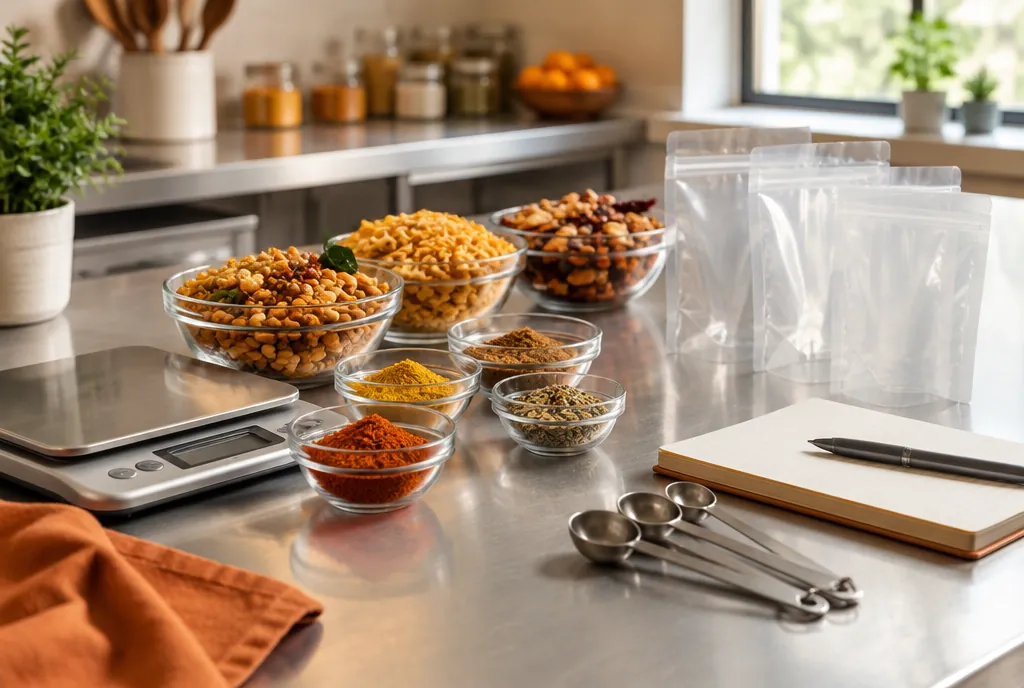
Food product development services take a food idea from a written brief to a product that can be made the same way, lot after lot, and sold legally in the market you choose. A full service covers the concept and brief, formulation and bench samples, shelf-life work, regulatory and label review, packaging, a pilot run and scale-up with a contract manufacturer. This guide explains each stage, what drives the cost and the time, and the questions to ask any provider before you sign.
It is written for brand founders. If you are starting a snack, a spice blend, a ready mix or a sauce under your own label, you will meet every stage below whether you hire one provider, several, or do some of it yourself. Poorti Mandalam LLP, a food house in Ahmedabad, does this work for founders through two of its doors, Launch and Make, and the last sections show where it fits.
What do food product development services include?
The word "development" covers a lot of ground, and providers use it differently. Some mean recipe work in a test kitchen and nothing more. Others mean everything up to the first commercial lot leaving the factory. Before you compare anyone, write down the stages and ask which ones each provider will own.
Each stage below has an output you should be able to hold, read or taste. If a provider cannot name it, ask why.
| Stage | What happens | What you should receive |
|---|---|---|
| Concept and brief | The product, the buyer, the market, the price point and the standard are agreed in writing. | A signed brief with target specification and the market it will be sold in. |
| Formulation | Recipe trials in small batches, adjusted for taste, texture, cost and process. | A written formula with ingredient specifications and a bench sample. |
| Bench sample approval | You taste and test the sample against the brief. | A sealed, approved reference sample that later lots are judged against. |
| Shelf-life work | Samples are stored under set conditions and checked at intervals. | A shelf-life report and the date you can put on the pack. |
| Regulatory and label review | The formula and label are checked against the law of the market where you sell. | Label content, ingredient list, nutrition panel and allergen statement ready for artwork. |
| Packaging | Pack material, format and size are chosen and tested with the product. | A pack specification and finished artwork files. |
| Pilot run | A small run on production equipment. | Pilot product, process notes and any changes to the formula. |
| Scale-up and first production | The product moves to full-scale manufacture with a contract manufacturer. | A first commercial lot with a certificate of analysis. |
Which of these services do you actually need?
You do not always need all eight stages from one provider. What you need depends on where you are starting from.
- You have an idea and nothing else. You need the whole path, starting with a brief that turns the idea into a specification.
- You have a home or restaurant recipe. You need formulation to turn kitchen measures into a factory formula, then shelf-life work.
- You have a product made by someone else and want to move it. You need a sample matched to your current product, then a pilot run and scale-up with the new maker.
- You sell in India and want to export. You need regulatory and label review for the destination market, and often a reformulation if an ingredient or additive is treated differently there.
Paying for full development on a product that only needs a new maker wastes money. Skipping formulation on a kitchen recipe usually costs more later.
What should go into the concept and brief?
The brief is the cheapest stage and the one founders most often rush. Most later disagreements about taste, cost or delay go back to something the brief did not say.
Write down the product name and type, who buys it and where, the market or markets it will be sold in, the pack size and format you have in mind, and the retail price you are aiming for. Add the standard it must meet: the taste and texture you want, any ingredients you will not accept, any claims you hope to make, and the shelf life you need for your sales channel.
Include the numbers you know, even rough ones: a target cost per pack and a first order quantity. If you are still choosing what to make, the house guide to Indian snack ideas from every state is a useful starting list.
One question belongs in the brief from day one: who owns the formula? Agree it in writing. If you may move production later, you need the formula and the ingredient specifications in your hands.
How do formulation and bench samples work?
Formulation is the recipe work. A food technologist makes small batches, changes one thing at a time, and records every change. The aim is a product that tastes right, runs on real equipment and meets your cost.
Expect more than one round. Give feedback in writing and against the brief: "less sour than sample two", not "not quite right". Taste samples side by side, with the people who will buy the product.
Ask for the formula in percentages, not in cups or handfuls, and for a specification for each ingredient. A specification says what the ingredient must be: its grade, its particle size, its moisture, its origin where that matters. Without them, the same recipe can taste different every time a supplier changes.
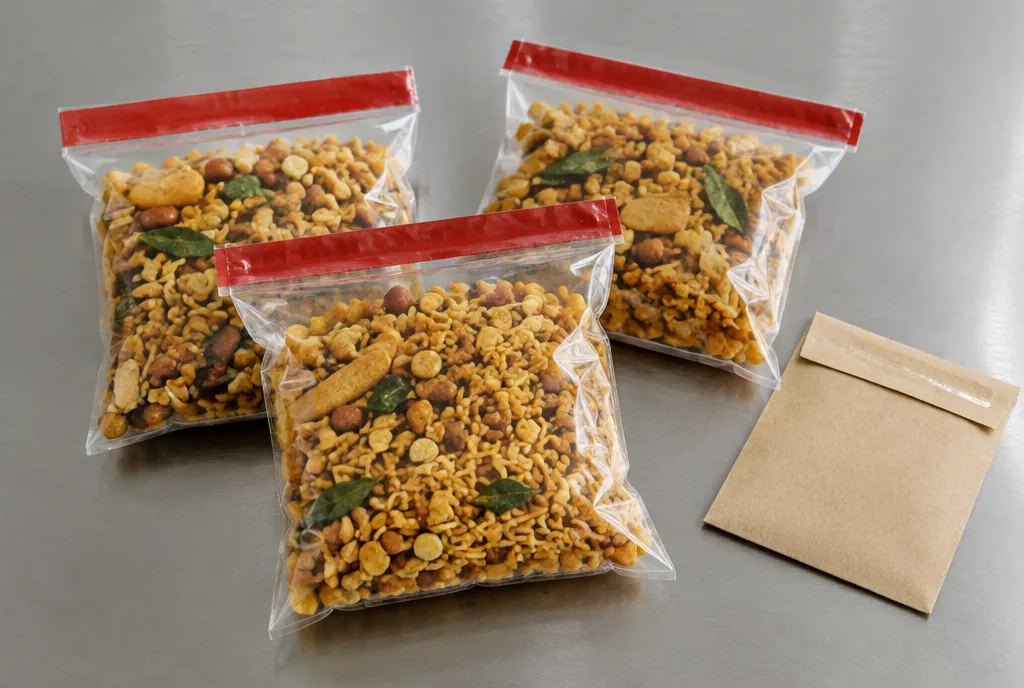
When you approve a sample, seal it. A sealed, dated reference sample is the thing every later lot is compared against. Keep one with you and ask the provider and the manufacturer to keep one each. If a production lot tastes different, the sealed sample settles the question.
How is shelf life tested and set?
Shelf life is the period a food stays safe and of the quality you promised, under the conditions it will meet in transport, storage and use. Ireland's food safety regulator, the FSAI, says in its guidance on validating product shelf life that there is no single generic method to estimate and set it, because so many conditions affect the result. So test your product, in your pack, rather than copying a similar one.
There are two broad approaches. A real-time study stores the product under normal conditions and checks it at intervals until it fails on taste, texture, smell or safety. An accelerated study stores it under harsher conditions, often higher temperature and humidity, to get an early estimate. Ask how the provider will confirm accelerated results with real-time data.
Ask what will be measured and by whom. For a dry snack this might be moisture, texture and rancidity; for a sauce it might be pH and microbial counts. Tests that support a safety claim should come from an accredited laboratory. In India, the food regulator publishes its list of notified and recognised food testing laboratories, which is a sensible place to check a laboratory a provider proposes.
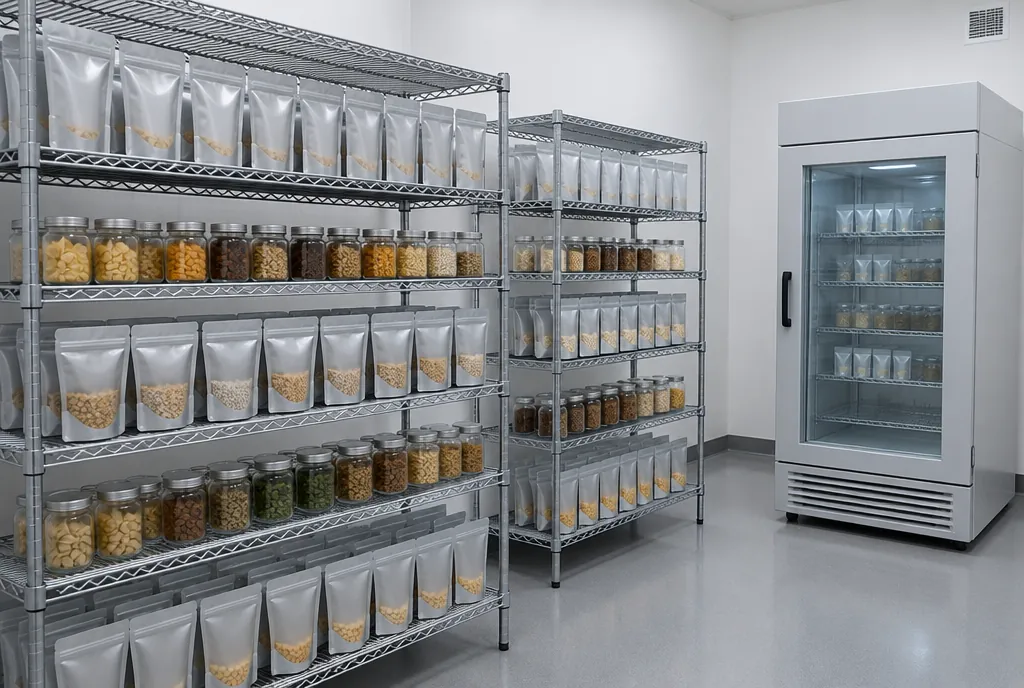
The result goes on your label. India's Food Safety and Standards (Labelling and Display) Regulations, 2020 set out how date marking is shown, including the day, month and year format for products with a shelf life of up to three months. Set a date you can defend.
What regulatory and label review does your market need?
The law of the market where the product is sold decides what goes into it and onto its label. A good provider asks where you will sell before the formula is fixed, because an additive or a claim that is allowed in one market may not be allowed in another.
In India, first check whether your product fits an existing standard. The Food Safety and Standards (Approval for Non-Specified Food and Food Ingredients) Regulations, 2017 require prior approval from the Food Authority before anyone makes or imports a food or ingredient for which no standard has been specified. A novel ingredient might need it, so find out before you build a brand around one.
The Indian labelling regulations list the particulars a package must carry, including the name of the food, the list of ingredients, nutritional information, the vegetarian or non-vegetarian declaration, food additives, the name and complete address, net quantity, the lot or batch number, date marking and the allergen declaration. They also say the FSSAI logo and licence number of the brand owner must appear on the label and, where the manufacturer is a different business, the manufacturer's licence number as well. That means your own licence must be in place before your first printed pack. The regulator's FoSCoS portal is where licences and registrations are applied for.
Outside India, the destination regulator sets the rules. The United States Food and Drug Administration publishes A Food Labeling Guide covering the statements a label must carry. In the European Union, the rules on food information to consumers sit in Regulation (EU) No 1169/2011. The house guide to food label requirements by export market sets out the main differences between India, the US, the EU, the UK and the UAE.
Ask the provider who signs off the final label content. If the formula changes after the label is approved, the label must be checked again.
What should packaging development cover?
Packaging protects the product and carries the label. Printed packs are usually bought in large minimum quantities, so they weigh on your first order. Choose the pack before the shelf-life study, because the study only counts for the pack it was run in.
In India the Food Safety and Standards (Packaging) Regulations, 2018 require food-contact material to be of food grade quality and suitable for the product and its transport. They require printing inks on food packages to conform to IS 15495, say the printed surface must not touch the food, and require a certificate of conformity from a NABL-accredited laboratory for the packaging material in contact with food. Ask your provider and your pack supplier for that certificate before you approve a pack.
Good packaging development covers the barrier against moisture, oxygen and light, the format, the fill weight, the seal, the outer carton and the artwork. Test the filled pack on the actual filling machine during the pilot run.
How do a pilot run and scale-up work?
A pilot run makes a small quantity on production equipment, or equipment close to it. Its purpose is to find out what changes when a recipe leaves the test kitchen. Mixing times, cooking temperatures and moisture behave differently at volume, and the pilot is the cheapest place to adjust.
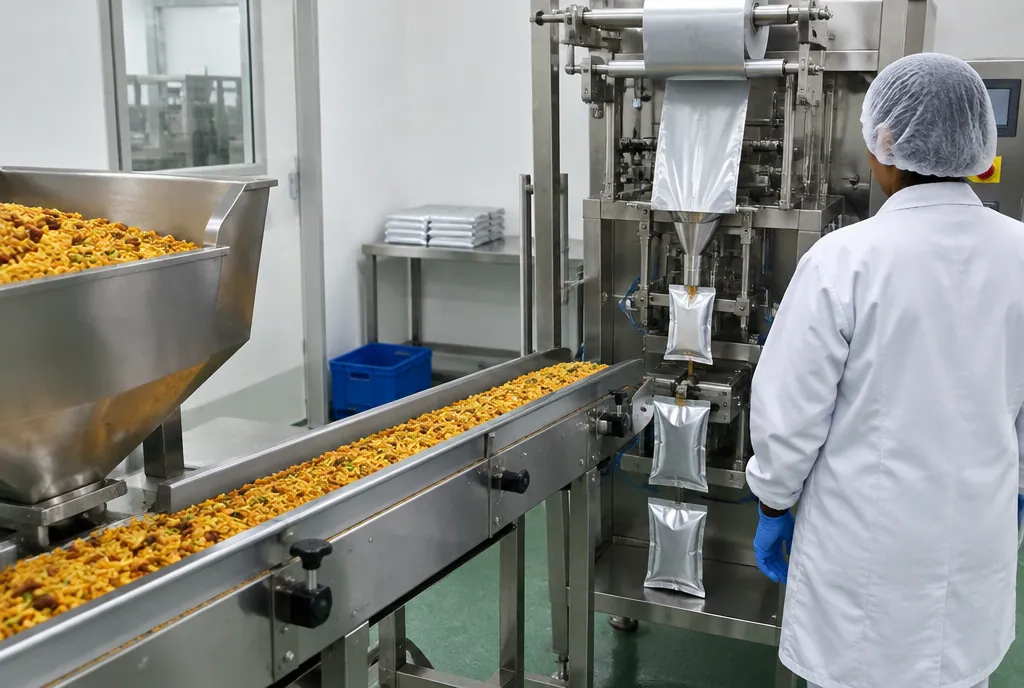
Compare the pilot product with the sealed sample, side by side. If they differ, decide in writing whether the pilot becomes the new reference or the process is adjusted until it matches. Ask for the process notes from the pilot: the settings, the batch size and any deviations. These notes are what the contract manufacturer will follow.
Scale-up is the move to full production with a contract manufacturer. Before the first commercial lot, agree the specification each lot must meet, how each lot is tested, what the certificate of analysis will report, how much of each lot is kept as a retained sample, and what happens if a lot fails. The house guide to starting a private-label food brand with a manufacturer in India covers minimum orders, contracts and the manufacturer's side of this step in more detail.
What drives the cost of food product development?
Costs vary so much between products and providers that any single figure would mislead you. What you can control is the set of things that move the cost up or down. Ask every provider to price each stage separately so you can see where your money goes.
| Cost driver | Why it moves the cost | How to keep it in hand |
|---|---|---|
| Clarity of the brief | Vague briefs lead to more sample rounds. | Fix the target taste, cost and market before formulation starts. |
| Number of formulation rounds | Each round uses technologist time and ingredients. | Agree how many rounds are included and what an extra round costs. |
| Shelf-life target and method | Longer studies and more test points cost more. | Match the target to your sales channel, not to the longest possible date. |
| Laboratory testing | Microbial, nutritional and contaminant tests are priced per test. | Ask which tests the law and your buyer require, and start there. |
| Number of markets | Each market can need its own label review and sometimes its own formula. | Launch in one market first unless a buyer abroad is already waiting. |
| Packaging minimums | Printed packs and new moulds are bought in large runs. | Start with a stock pack format and a printed label or sleeve if your channel allows. |
| Pilot and first order size | Lines have set-up costs and minimum batch sizes. | Ask for the minimum batch on the line that will make your product. |
| Changes after approval | A change to the formula after label and pack approval repeats work. | Freeze the formula before artwork is printed. |
Watch for costs outside the development fee: sample ingredients, couriers, laboratory and licence fees, printing plates or cylinders, and freight.
How long does food product development take?
Any provider who gives you a fixed date before seeing your brief is guessing. The time depends on how many formulation rounds you need, how long your shelf-life study must run, whether your product needs regulatory approval, how long printed packs take to arrive, and when the manufacturer has a slot on the line.
Artwork can be designed while shelf-life samples are in storage, but packs cannot be printed until the formula is frozen and the label is final. A real-time shelf-life study takes as long as the shelf life you want to prove, so you can launch with a shorter, well-supported date and extend it as data comes in.
Regulatory steps run on the regulator's clock, not the provider's. For a non-specified food in India, the approval regulations give the Food Authority forty-five days to tell an applicant of any deficiencies after preliminary scrutiny, and the applicant thirty days to reply, before the decision itself. Build those steps into your plan rather than hoping to skip them.
Ask each provider for a stage-by-stage plan, and ask what has delayed their recent projects.
What should you ask a provider before you sign?
These questions work for any provider. Ask them in writing and keep the answers.
- Which stages do you own, and which do you hand to someone else? Who is that, and who is responsible if they get it wrong?
- Who will own the formula and the ingredient specifications when we finish?
- How will you seal and store the approved sample, and how will production lots be compared with it?
- Which laboratory will run the tests, and is it accredited for those tests?
- How will you set the shelf life: real-time, accelerated or both? What will you measure?
- Which market's law will you check the formula and label against, and who signs off the final label content?
- Will the pilot run be on the line that makes the commercial product?
- What will the certificate of analysis for each production lot report?
- What happens, and who pays, if a production lot does not match the approved sample?
- Can I visit the facility, or have it inspected, before the first order?
A checklist you can use
Use this list before you sign, and again before your first commercial lot.
- A written brief with the product, the market, the pack size, the target price and the standard it must meet.
- Formula ownership agreed in writing.
- A formula in percentages and a specification for every ingredient.
- A sealed, dated reference sample held by you, the provider and the manufacturer.
- A shelf-life plan stating the method, the storage conditions, what is measured and the laboratory.
- Confirmation of whether the product needs prior approval in India or the destination market.
- Label content checked against the law of the market of sale, including allergens and date marking.
- Your own food business licence or registration in place before packs are printed.
- Pack material chosen before the shelf-life study, with the food-contact conformity certificate on file.
- A pilot run on production equipment, with process notes.
- A lot specification, the content of the certificate of analysis and the retained-sample rule agreed with the manufacturer.
- A cost sheet that shows every stage and every cost outside the fee.
Where does Poorti fit?
Poorti is a food house, not a manufacturer, and owns no plant. It works through a circle of farmers, processors, manufacturers, testing laboratories and logistics partners across India, and holds them to one standard: we put our name on what we checked. For founders, the work comes through two doors.
Launch is the door for starting a food brand. It suits founders who are at the idea or recipe stage and want the early steps taken in the right order.
Make is the door for getting a product made under your label. It runs in six steps. First, the brief: you name the product, the market and the standard it must meet. Second, a sealed sample, sent for your approval before anything is contracted. Third, brand and pack. Fourth, produce, by the circle member suited to the product, against your sealed sample. Fifth, a certificate of analysis for every lot. Sixth, dispatch, to your warehouse in India or FOB Mundra, CIF or C&F for export. Private-label and neutral packing are both possible.
Whichever provider you choose, the questions above still apply. Ask them of the house as you would of anyone else.
Questions people ask
What is the difference between food product development and contract manufacturing?
Product development creates the formula, the specification, the shelf life, the label and the pack. Contract manufacturing makes the finished product in volume to that specification. If your provider does only development, plan how the formula passes to the manufacturer.
Do I need a food technologist to develop a product?
For a product sold in shops, you need someone with food technology training to turn a recipe into a formula that is safe, stable and repeatable at volume. That person can sit with a provider, a manufacturer or a laboratory.
Can I develop a product from my home recipe?
Yes, but expect the recipe to change. Kitchen measures become percentages and some ingredients are swapped for ones bought to a consistent specification. Keep tasting against your original.
Who owns the recipe after development?
Whoever the contract says owns it. Agree it in writing before formulation starts, and have the formula and ingredient specifications delivered to you.
Do I need a shelf-life study before launch?
You need a shelf-life date you can support on the label, and the evidence should come from your product in your pack. A shorter supported date can be extended as real-time data arrives.
Does my label need a separate licence number if someone else makes my product?
In India, yes. The labelling regulations require the FSSAI logo and the licence number of the brand owner on the label, and the manufacturer's licence number as well where the manufacturer is a different business. Check the current regulations and amendments on the FSSAI website before you print.
If you are a brand founder with a product in mind, send the product, the specification you want it made to and the market or destination port through Poorti's Make page, and the house will start from your brief.
Buying from India?
Send the product, the specification you buy to and the destination port, and the house will come back to you.
Send an enquiry