The Makhana Job
A sourced plan to launch a roasted makhana brand in India
A free, sourced plan to launch a roasted makhana brand in India: what one pack costs, what each channel leaves you, who you need, the licences, the first 13 weeks and what can go wrong.
Checked 15 October 2026 · Act 0 takes a minute, the full plan about 60 minutes · every figure sourced
The acts
- 0. The job in 60 seconds
- 1. The tip: why now
- 2. The target: the product on one page
- 3. Casing the joint: who buys, where, and what they pay
- 4. The money trail: where the ₹199 goes
- 5. The crew: who you need
- 6. The gear: licences and paperwork, in order
- 7. The plan: thirteen weeks to first stock on shelf
- 8. The alarms: what could sink you
- 9. Go time: where and how to sell
- 10. The getaway: export, in brief
- Back pocket
Position as of 15 Oct 2026, for a first-time founder. Sources are in the numbered footnotes. Numbers marked "estimate" or "assumption" are not quotes: replace each one with a written quote or your own test result before you spend money.
This briefing sets out Poorti's sourced research in the order a new founder asks questions. Brands appear only as sources of observed prices or published facts. None of them is a recommendation.
0. The job in 60 seconds
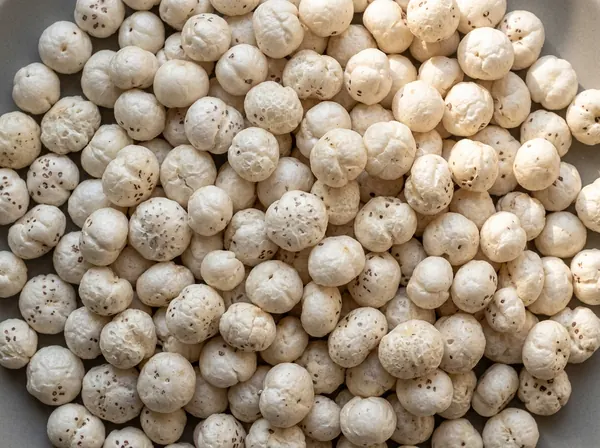
The point: A small, contract-made roasted makhana brand can work in India, but only if you buy the raw makhana cheaply and sell in the formats that pay.
The opportunity. Makhana is popped fox nut (Euryale ferox). The government reports that the domestic makhana market grew 17-18% a year between 2021-22 and 2024-25, and expects it to reach ₹11,000-12,000 crore by 2029-30.1 Flavoured makhana sells mostly on quick commerce: the 10-minute grocery delivery apps such as Blinkit, Zepto and Instamart. There, the leaders' 80 g packs carry an MRP of ₹239 (maximum retail price: the legal ceiling printed on the pack, including tax) and actually sell at about ₹199.2
What you make per pack. In this briefing, "contribution" means what is left from one pack after goods and services tax (GST), the sales channel's cut and the cost of making and delivering the pack. It comes before salaries, rent and brand marketing. Base case (estimate; raw makhana at ₹950/kg, so a pack costs ₹105):
| Where you sell | Shopper pays per 80 g pack | Your contribution per pack |
|---|---|---|
| Quick commerce, single pack | ₹199 | ₹17 |
| General trade (neighbourhood shops, through a distributor) | ₹239 | ₹28 |
| Amazon, single pack | ₹199 | −₹21 |
| Amazon, 3-pack at ₹499 | ₹166 | ₹1 |
| Your own website (D2C, direct to consumer), 4-pack at ₹899, first order | ₹225 | ₹10 |
| Your own website, 4-pack, repeat order | ₹225 | ₹85 |
What it costs to start. About ₹17 lakh for a lean launch (3 flavours, 9,000 packs). About ₹58.5 lakh for a fuller one (30,000 packs, custom recipes, cylinder-printed pouches). Both are estimates. Neither includes salaries, rent, a warehouse, or the working capital you need while platforms pay you late (section 7).
The one big risk. Lawa, the raw popped makhana you buy, is 59-73% of your pack cost. Its price rose from about ₹950/kg in January 2025 to ₹1,250/kg in February 2025, and has now fallen to about ₹565/kg (October 2026).34 Above about ₹1,190/kg, a quick-commerce pack earns you nothing (estimate).
Verdict. 1. Worth doing if you can secure lawa near today's low price. Thin at mid-cycle prices. Loss-making at the 2025 peak. 2. Start narrow: Blinkit in Ahmedabad, Amazon multipacks, bundles on your own site. Open the next channel only when the last one pays. 3. Before you order stock, get three written manufacturer quotes, a freight quote, a measured roasting yield and your own shelf-life data.
Your move: Ask for a written price on graded lawa this week. If it is above about ₹1,190/kg, stop and rethink before spending anything else.
1. The tip: why now
The point: Demand is growing, lawa has just become cheap, and the shelf price is settled, but cheap lawa may not last.
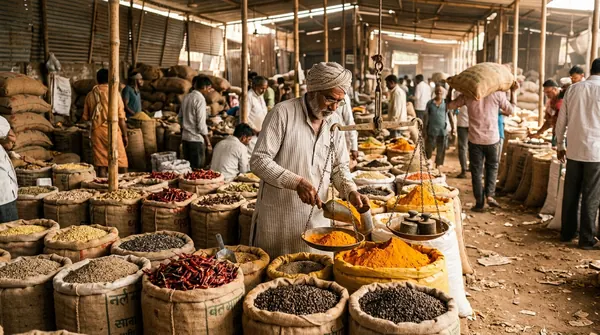
Demand is real, but mostly price. The Press Information Bureau (PIB) factsheet of 19 Aug 2026 is the most credible anchor: 17-18% annual growth, heading for ₹11,000-12,000 crore by 2029-30.1 The same factsheet shows that most of that growth is price, not volume. Production grew only 4-5% over FY22-FY25, while the average price rose from about ₹500/kg (2020-22) to nearly ₹1,250/kg (2025). India eats 3,000-3,500 tonnes of popped makhana a month, about 5,000 tonnes in festive months. Branded and organised snack makers take 1,800-2,000 tonnes of that.1 On the apps, a Blinkit executive said makhana grew 25 times on the platform (no period given).5 In 2023, makhana was Instamart's top snack, with 1.3 million orders.6
Private estimates of the total market disagree more than tenfold (about ₹929 crore to over ₹12,000 crore), so use the government figures.789 No source measures the flavoured slice on its own.
The cost window: lawa has halved. Lawa (also called phool) is graded by size in "suta": 4 suta is economy, 6-7 suta is premium. Bihar's growing area jumped 40-45%, and processors could not absorb the bumper crop. New-season prices at the producing centres fell from about ₹1,050/kg to ₹530-535/kg, then steadied near ₹565/kg. Delhi wholesale was ₹700-1,250/kg, depending on grade (1 Oct 2026).4 A trade guide quotes higher prices (₹820-1,100/kg for 5 suta in July 2026) and says January-March prices run ₹100-300/kg higher.10
Why the window may not last. The price history swings both ways. In 2025, lawa rose 32% in ten days, from ₹950/kg to ₹1,250/kg, after the Budget announced a Makhana Board.3 In 2022, a farmer in Supaul reported a crash from ₹500-600 to ₹300-400/kg.11 Nobody can tell you the next move. What the record shows is that today's price sits near the bottom of the recent range, and that prices have jumped fast before.
The shelf price is settled. On quick commerce, the leading brands sell 77-80 g packs side by side at ₹239 MRP and ₹198-200. Among 31 live listings of 70-80 g packs on 15 Oct 2026, the most common MRP was ₹239 and the median selling price was ₹199.2 That is good news, because you know your price. It is also bad news, because you cannot pass a lawa spike on to shoppers.
Your move: Get a written price for 3-6 months of graded 4-5 suta lawa and compare it with the ₹950/kg base case in section 4. Locking in supply is a judgement call, not a sourced recommendation, so price it before you decide.
2. The target: the product on one page
The point: Launch one familiar product at the leaders' price, made by someone else to a standard recipe.
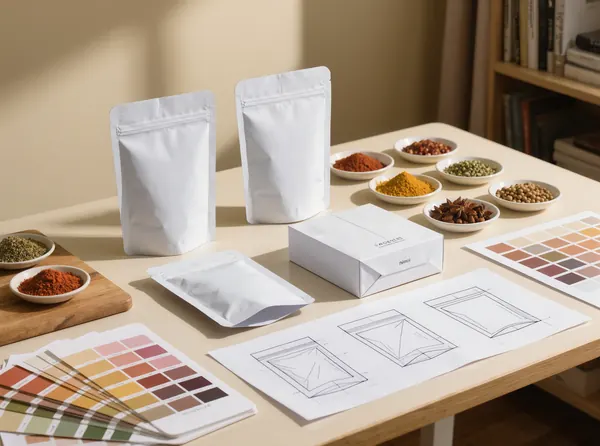
You sell popped makhana that has been roasted, tossed in oil and seasoning, and packed in a nitrogen-flushed metallised pouch. (Nitrogen pushes out oxygen, which slows the oil turning rancid.) A contract manufacturer (CM), a licensed factory that makes food for other brands, roasts, seasons and packs it. You design, market and sell it. You hold your own registration with FSSAI (the Food Safety and Standards Authority of India) as a "relabeller": FSSAI's term for a business whose product is made by a third party.12
| Item | Choice for launch | Basis |
|---|---|---|
| Format | 80 g, nitrogen-flushed metallised pouch | 77-80 g at ₹239 MRP is the leaders' standard large pack on quick commerce (15 Oct 2026)2 |
| Recipe | About 82% makhana, 8% rice bran oil, 10% seasoning | Assumption from snack seasoning guidance; confirm by trial batch13 |
| Flavours | Peri peri, pudina (mint), Himalayan salt and pepper | Most frequent flavours observed, 15 Oct 202614 |
| MRP | ₹239 (₹299 per 100 g; unit sale price ₹2.99/g); sells at ₹199 on quick commerce | Most common MRP among 31 quick-commerce listings of 70-80 g; median selling price ₹1992 |
| GST | 5%, included in the MRP | Notification 9/2025-CT(Rate), in force 22 Sep 202515 |
| Ex-factory cost | About ₹87 / ₹105 / ₹134 per pack (low / base / high lawa price) | Estimate; unit-cost sheet in the Back pocket |
| Licence | FSSAI relabeller registration, ₹100 a year, up to ₹1.5 crore turnover | FSSAI order, 13 Mar 202616 |
| Declared shelf life | 6 months, until a real-time study supports more | Assumption (section 6) |
| Manufacturer | Licensed CM, using its standard flavours | Avoids custom development cost (assumption) |
| Channels, in order | Blinkit in Ahmedabad, Amazon multipacks and D2C bundles first; one Ahmedabad distributor, office snack boxes and more apps from month 3; chains and gifting later | Inference from channel economics (sections 4 and 9) |
| First-90-day budget | About ₹17 lakh lean, about ₹58.5 lakh fuller | Estimate (section 7) |
Why ₹239? A price above it needs a visible reason, such as a gourmet flavour or added protein. A much lower price puts you among small sellers who discount 40-70%, and the cost sheet leaves little room below ₹199 unless lawa stays cheap. A 100 g "value" pack at ₹206-219 (one was reported on Blinkit on 15 Oct 2026) works only at today's lawa price. It earns about ₹20-28 a pack at low lawa, −₹3 to ₹5 at base, and loses ₹31-39 at high (estimate).
Your move: Turn this table into a one-page product brief and attach it to the request for quotation you send to manufacturers (section 5).
3. Casing the joint: who buys, where, and what they pay
The point: Your buyer is an urban adult who wants a "better for you" snack that still tastes like a snack, and who buys it mostly on quick commerce at about ₹235 per 100 g.
Who. The main buyer is an urban adult who snacks "better for you" but expects normal snack taste. A second group buys plain or lightly salted makhana for fasting (vrat) and festivals. Most flavoured packs do not suit vrat, which needs sendha namak and no onion or garlic (inference). This profile is a synthesis of the evidence, not a measured segmentation. Swiggy Instamart's CEO said 43% of Gen Z and Millennials order packaged snacks weekly through quick commerce.5 The government describes makhana as low in fat (0.33 g/100 g) and low in glycaemic load,1 but you cannot print those as claims freely (section 6).
Where. General trade (independent kirana and neighbourhood shops, supplied by distributors) is still the largest channel for makhana overall, with 39% of sales in 2025. Most of that is loose, plain makhana.7 For branded flavoured makhana, quick commerce leads. One large makhana-led snack company's published channel mix is about 40% quick commerce, 35% e-commerce, about 10% modern trade (supermarket chains) and 7-8% general trade.17 The shelf is crowded: one Flipkart search on 15 Oct 2026 returned about 1,800 listings.14
What they pay on quick commerce. Search results on four apps, 15 Oct 2026, 152 listings of flavoured or roasted makhana:2
| App (15 Oct 2026) | Listings | Selling price per 100 g, median (range) | MRP per 100 g, median | Median discount |
|---|---|---|---|---|
| Blinkit (Ahmedabad) | 77 | ₹244 (₹164-362) | ₹281 | 11% |
| Zepto (Ahmedabad) | 38 | ₹230 (₹125-262) | ₹269 | 11% |
| Instamart (default location) | 24 | ₹190 (₹130-276) | ₹289 | 27% |
| BigBasket (default location) | 13 | ₹201 (₹67-255) | ₹250 | 18% |
| All four | 152 | ₹235 | ₹273 |
| Pack size, all four apps | Listings | Selling price per 100 g, median (middle half) | Most common MRP |
|---|---|---|---|
| 16-25 g (impulse) | 37 | ₹219 (₹180-230) | ₹50 |
| 30-60 g | 83 | ₹238 (₹188-245) | ₹150 |
| 70-80 g | 31 | ₹257 (₹250-260) | ₹239; median selling price ₹199 |
| 100 g | 1 observed, plus 1 owner-reported | ₹227 observed; ₹206 owner-reported on Blinkit | ₹259 |
Three things matter. Discounts on Blinkit and Zepto are shallow (median 11%), so the printed price is close to what shoppers pay. The 77-80 g pack is a tight, settled price point. And 100 g flavoured packs are rare, which leaves room for a value pack, but only if the cost works (section 2).
Marketplaces. Across Amazon.in, Flipkart and brand websites, 32 listings on 15 Oct 2026 had a median MRP of ₹305 per 100 g and a median selling price of ₹232, after a median discount of 25%.1418 Small sellers print inflated MRPs and sell at ₹100-155 per 100 g. Gourmet and novelty packs reach ₹400-440. A wholesale listing offers a finished 80 g peri peri pack at ₹100, with no MRP.19 Treat that as a ceiling on what your own finished pack should cost.
Your move: Open Blinkit and Zepto at your own address and write down the price, pack size and discount of the top ten flavoured makhana packs, so you know the shelf you are joining.
4. The money trail: where the ₹199 goes
The point: Of the ₹199 a shopper pays on quick commerce, you keep about ₹17, and lawa decides most of what happens to the rest.
Follow one 80 g pack sold on a quick-commerce app in the base case (lawa at ₹950/kg). Each party takes its share and hands what is left to the next.
- The shopper hands over ₹199 at checkout.
- The government takes 5% GST, which is already inside the price: about ₹9. It hands on about ₹190.
- The platform takes its commission, its ad charges, and an allowance for RTV (return-to-vendor: damaged or unsold stock sent back to you) and damage: about ₹67 in all. It hands you about ₹122.
- You pay the contract manufacturer ₹20 to roast, season and pack. About ₹102 is left.
- The pouch printer takes ₹7. About ₹95 is left.
- The transporter takes ₹4 (a placeholder; no sourced rate). About ₹91 is left.
- The seasoning supplier takes ₹2.6. About ₹89 is left.
- The oil supplier takes ₹1.2. About ₹87 is left.
- The carton maker takes ₹1. About ₹86 is left.
- The pond, through the lawa trader, takes ₹69 for 72.9 g of lawa. You keep about ₹17.
| Step | Who takes | Takes | Left |
|---|---|---|---|
| 1 | Shopper pays | ₹199.00 | |
| 2 | Government: 5% GST inside the price | ₹9.48 | ₹189.52 |
| 3 | Platform: commission and ads 32.5%, RTV and damage 3%, of ₹189.52 | ₹67.28 | ₹122.24 |
| 4 | Contract manufacturer: ₹250/kg × 0.08 kg | ₹20.00 | ₹102.24 |
| 5 | Printed pouch | ₹7.00 | ₹95.24 |
| 6 | Freight (placeholder) | ₹4.00 | ₹91.24 |
| 7 | Seasoning, 8 g | ₹2.60 | ₹88.64 |
| 8 | Rice bran oil, 6.4 g | ₹1.20 | ₹87.44 |
| 9 | Shipper carton share | ₹1.00 | ₹86.44 |
| 10 | Lawa, 72.9 g at ₹950/kg | ₹69.20 | ₹17.24 |
Shopper pays          ₹199  ████████████████████
After GST             ₹190  ███████████████████
After the platform    ₹122  ████████████
After CM, pack, etc.  ₹ 86  █████████
After lawa            ₹ 17  ██
Sources: observed price,2 GST rate,15 and commission plus ads of 30-35%, modelled at 32.5%;20 the 3% RTV allowance is an assumption, and the costs are the base case of the Back-pocket unit-cost sheet (estimates). Platform fees carry 18% GST, which you can normally claim back, so they are shown before GST (inference).21
That ₹17 is contribution, not profit. Salaries, rent, warehousing and any brand marketing beyond the channel ads all have to come out of it.
What changes it.
- Lawa. Every ₹100/kg move in the lawa price changes pack cost by about ₹7.3 (estimate). At today's crashed price, the quick-commerce pack earns about ₹35. At the 2025 peak, it loses about ₹12.
- Gross margin. In the base case it is (₹190 − ₹105) ÷ ₹190, about 45%. At low lawa it is about 54%. Commentators say snack brands need 55-70% to survive and about 70% to break even on quick commerce.20 Food brands typically reach only 35-55%.22
- The platform's cut is growing. Snack brands' margins on quick commerce slipped to about 13-15% as ad rates doubled in peak slots.23
- Price. Every ₹10 on the quick-commerce price is worth about ₹6 a pack to you after GST and the platform's cut (estimate). At ₹224 instead of ₹199, you would keep about ₹33. But the leaders hold ₹199, so a higher price needs a reason the shopper can see.
What each channel pays. All figures are estimates. Low, base and high lawa are ₹700, ₹950 and ₹1,350 per kg. These scenario values are the researcher's choices, not quoted prices.
| Per 80 g pack, ₹239 MRP | Quick commerce | Amazon, single | Amazon, 3-pack at ₹499 | General trade | D2C 4-pack, first order | D2C 4-pack, repeat |
|---|---|---|---|---|---|---|
| Consumer pays | ₹199 | ₹199 | ₹166 | ₹239 | ₹225 | ₹225 |
| Less 5% GST | ₹190 | ₹190 | ₹158 | ₹228 | ₹214 | ₹214 |
| Platform, trade, fees, ads, shipping | −₹67 | −₹105 | −₹52 | −₹95 | −₹99 (incl. ₹75 CAC) | −₹24 |
| Net realisation to you | ₹122 | ₹84 | ₹106 | ₹133 | ₹115 | ₹190 |
| Contribution, low lawa (₹87 cost) | ₹35 | −₹3 | ₹20 | ₹46 | ₹28 | ₹103 |
| Contribution, base lawa (₹105 cost) | ₹17 | −₹21 | ₹1 | ₹28 | ₹10 | ₹85 |
| Contribution, high lawa (₹134 cost) | −₹12 | −₹50 | −₹28 | −₹2 | −₹19 | ₹56 |
| Lawa price at which contribution hits zero | ~₹1,190/kg | below ₹700/kg | ~₹970/kg | ~₹1,330/kg | ~₹1,090/kg | ~₹2,120/kg |
The assumptions behind each column, briefly:
- Amazon. Referral fee 0% on grocery items up to ₹1,000 since 16 Mar 2026. Closing fees modelled at ₹20-22. Shipping of ₹55-65 per order is a placeholder to check in Seller Central. Ads at 15% of sales (assumption).2124
- General trade. Distributor 10-12% and retailer 25-30%, modelled at 38.5% of MRP combined, plus 5% for schemes and damages (assumption).25
- D2C. Payment gateway 2.36%.26 Shipping ₹60 per order (assumption; one courier aggregator starts at ₹29 per 500 g before surcharges)27 plus a ₹15 outer box (assumption). CAC (customer acquisition cost, what you spend to win one new buyer) of ₹300, within a ₹200-500 benchmark,28 which is ₹75 a pack on a 4-pack.
The table teaches four lessons:
- A single pack loses money on Amazon. Fixed per-order fees eat a ₹199 order. In Amazon's own grocery example, a ₹300 item on Easy Ship pays ₹106.79 in fees including GST.29 Sell 3- and 4-packs there. If the older 4% referral fee shown on Amazon's grocery page applied, base contribution would fall to about −₹29 for a single and about −₹6 for the 3-pack (estimate). Check the fee preview in Seller Central before pricing.
- General trade earns more per pack than quick commerce (₹28 against ₹17), but quick commerce is where flavoured makhana sells. You need both.
- D2C pays only on repeat orders. On Shopify's Basic plan, payment fees stack to 4.36%, not the 2.36% modelled. That cuts first-order contribution to about ₹5-6 and repeat contribution to about ₹80 (estimate).30
- Quick commerce pays late, at T+14 to T+21 (14 to 21 days after the sale).31 Your cash is tied up until then.
Your move: Copy the unit-cost sheet into a spreadsheet, replace each estimate with a written quote as it arrives, and recompute this channel table every time.
5. The crew: who you need
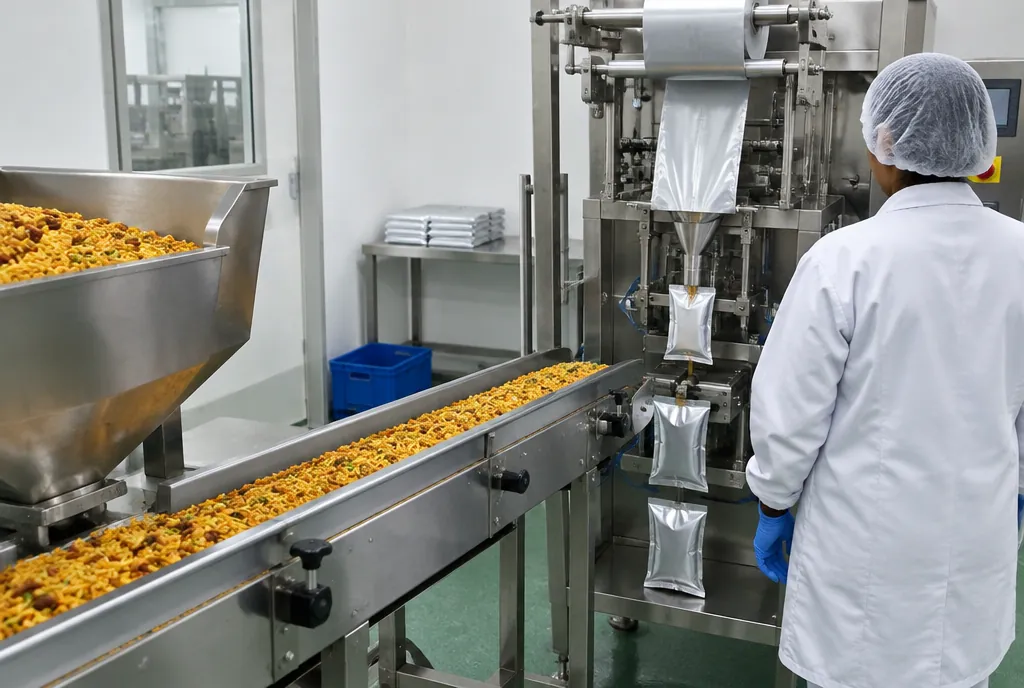
The point: You run a brand without a factory, so your business is the people you hire and the written quotes you get from them.
A few terms first. An SKU (stock-keeping unit) is one product in one flavour and size. The MOQ (minimum order quantity) is the smallest batch a supplier will make. Sale-or-return (SOR) means you own the stock until it sells, and unsold stock comes back to you.
| Role | What they do for you | What to ask them | What it costs (report figures only) |
|---|---|---|---|
| Contract manufacturer (CM) | Roasts, seasons, nitrogen-flushes and packs; holds its own FSSAI manufacturing licence | The 14-point request for quotation (RFQ) below. Does its licence cover your food category? MOQ per flavour? Is the trial-batch fee credited against the first order? | Conversion charge ₹180-320/kg (modelled at ₹250/kg, ₹20 a pack), unclear what it includes;32 custom recipe development ₹1-3 lakh;32 MOQs from 10 kg per standard flavour (one supplier) to 500-2,000 kg per batch (another); trial batches "at higher pricing"33 |
| Pouch printer (converter) | Prints and laminates the pouches | Laminate specification; water-vapour and oxygen transmission figures; the NABL migration certificate for the packaging; inks to IS 15495; no recycled plastic in food contact | Digital ₹3.40-10 a pouch, from 1,000 pieces;34 gravure about ₹2 a pouch at a 10,000 minimum,35 plus cylinders at ₹6,000-11,000 each, up to 9 for a complex design36 |
| Designer | Brand and pack artwork, label layout | Build the label from lab data; show both licence numbers, the veg logo, the unit sale price and allergens; no banned claims | Packaging design ₹30,000-1 lakh32 |
| FSSAI / food-regulatory consultant | Licence choice; review of label and claims | Is the ₹100 registration enough for Amazon's warehouses? When do I need a Central licence? Is the final artwork compliant? | Regulatory and lab testing together ₹25,000-75,000;32 for the consultant's fee, get a written quote |
| Chartered accountant (CA) | GST and Udyam registration, GST filings, input credit | How do I handle "inverted duty" (output taxed at 5%, inputs at up to 18%)? Which HSN code (the product code used for GST)? | Get a written quote |
| NABL lab (accredited by India's National Accreditation Board for Testing and Calibration Laboratories) | Nutrition, allergen and gluten tests; shelf-life checks | Nutrition panel per 100 g; gluten below 20 mg/kg; moisture, water activity, peroxide value and free fatty acids each month; aflatoxin against 30 µg/kg | Inside the ₹25,000-75,000 line above;32 otherwise get a written quote |
| Distributor (from month 3) | Stocks you and sells through its salesmen's fixed shop routes ("beats") | Margin; credit days; who funds launch schemes and how they are settled; which outlets it already serves | Snack distributor 5-10% (other guides 8-15%; exclusive 10-15%); retailers expect 15-25% from a new brand; credit 7-21 days, or cash-and-carry at first37 |
| Quick-commerce category manager | Approves each SKU; raises purchase orders (POs) | SOR terms; the reorder trigger; shelf life required at intake; is the ₹25,000 refundable?; payment cycle | About ₹25,000 per SKU per state, held as ad credit;20 commission 15-25% of price,31 30-35% with ads20 |
| Transporter | Moves lawa in and finished cartons out | A rate by volume (makhana is so light that only about 4 t fits in a 40-ft container, so trucks charge by space) | ₹4 a pack placeholder; get two written quotes38 |
What a quote should include. No standard list exists. Supplier pages price three layers separately: product cost per kg; one-off costs (recipe development, packaging design, regulatory and lab testing); and taxes and freight, which are usually extra.3239 Send every CM the same RFQ and ask them to state each item separately, so you can compare quotes line by line (inference):
- who supplies the lawa, and at what grade and price;
- whose seasoning blend is used;
- oil or ghee type;
- pouch laminate specification, and who prints the pouch;
- nitrogen flush and residual-oxygen specification;
- shipper cartons;
- batch coding;
- per-batch tests (microbiology, moisture, nutrition);
- trial-batch fee, and whether it is credited against the first order;
- allowed yield and breakage tolerance;
- GST rate and HSN code;
- ex-works or delivered price;
- payment terms;
- the CM's FSSAI licence copy, food category and latest audit report.
If a quote already includes seasoning and pouches, delete those lines from your cost sheet so you do not count them twice. No source publishes a CM lead time, sample fee or payment-terms norm. A standard-flavour programme of about 100-500 kg per flavour (about 1,250-6,250 packs of 80 g) is the realistic entry point. A custom recipe pushes the MOQ to about 1 tonne (inference).33 Co-packers sit both in Bihar's makhana belt and near big markets such as Delhi NCR.40 Your own factory can wait: the official 10 kg/hour model unit costs ₹27.23 lakh and is worth costing only at roughly 1-2 tonnes a month (estimate).39
Your move: Send this RFQ to at least three CMs and ask each for samples of the three standard flavours.
6. The gear: licences and paperwork, in order
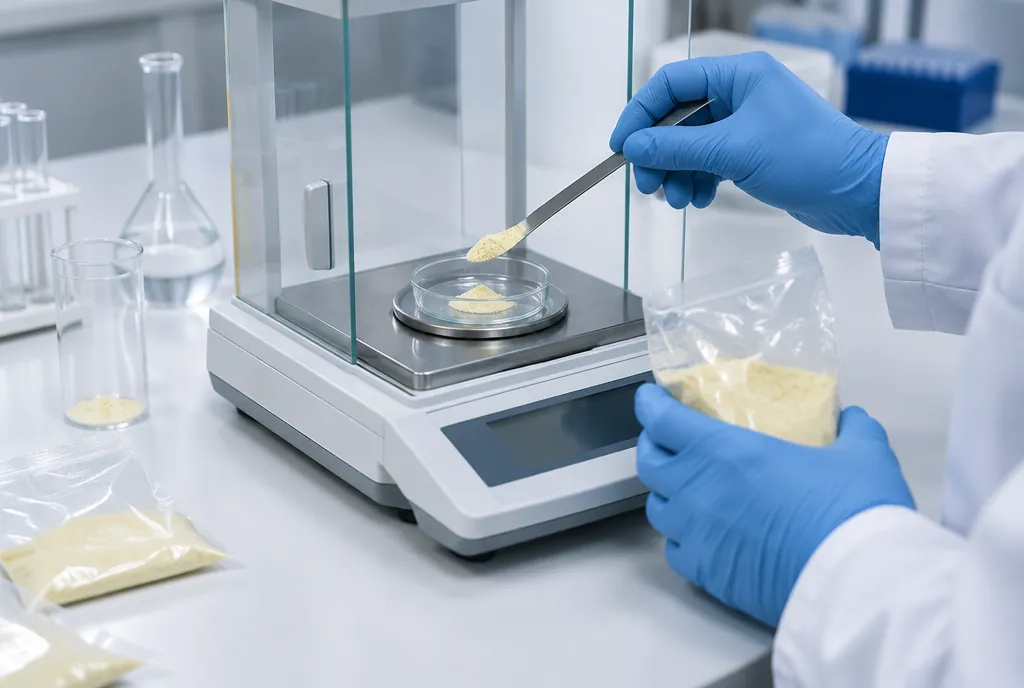
The point: Eight pieces of paperwork stand between you and a shelf, and most must be done before you print a single pouch.
1. GST and Udyam. GST registration lets you invoice platforms and claim back the GST on your inputs. Every channel asks for it. Udyam is the government's registration for micro, small and medium enterprises, and it unlocks the lower trademark fee. Your product is taxed at 5%: every plausible classification for packaged roasted makhana sits in Schedule I of Notification 9/2025.15 Because packaging and services are taxed at up to 18% and your sales at 5%, unused credit can pile up. This is called "inverted duty". Ask a CA about it before launch.
2. Trademark. Search the brand name on IP India before you print anything. File in Class 29 (prepared nuts and seeds, snack foods) and/or Class 30 (cereal-based snacks, seasonings). The government fee is ₹4,500 per class for individuals, DPIIT-recognised start-ups and Udyam-registered businesses, and ₹9,000 per class for companies without those. Registration takes 9-12 months if nobody objects.41 Use "TM" until then and "®" only after. Amazon Brand Registry needs a trademark, and sources disagree on whether a pending Indian application is enough,42 which is one more reason to file in week 1.
3. FSSAI relabeller registration. Apply on FoSCoS, FSSAI's online licensing portal, as a "Relabeller" (under the Manufacturer group). A relabeller does not need a qualified person in charge of operations.12 The turnover bands below apply from 1 Apr 2026 and replace the old ₹12 lakh and ₹20 crore bands, so ignore guides that still quote them.16
| Licence | Turnover | Fee per year |
|---|---|---|
| Registration | Up to ₹1.5 crore | ₹100 |
| State licence | ₹1.5 crore to ₹50 crore | ₹5,000 |
| Central licence | Above ₹50 crore; or "Proprietary Food", an e-commerce food business, or operating in two or more States (whatever the turnover) | ₹7,500 |
Selling on Amazon or a quick-commerce app does not by itself make you an "e-commerce" food business; that category is generally for the platforms (inference; confirm with each platform). Once you hold stock in a second State, budget for the Central licence.12 Your CM must hold its own manufacturing licence covering your food category. Secondary guides say your application needs the CM agreement and a copy of its licence.43 FSSAI's 2021 FAQ promises a registration in 7 days and a licence in 60 days.44 Registrations no longer expire, but annual fees must still be paid,45 and licensed relabellers file an annual return (Form D1) by 31 May.44
There is no FSSAI product standard for makhana. The plausible food categories are 15.2 (processed nuts), 18.2.3 (dry-fruit and nut snacks) and 18.2.4 (ready-to-eat products). Use the one your CM already uses for makhana, because it decides which additives your seasoning may contain.46 As internal limits, use the voluntary Agmark grade for "Makhana Fried": moisture at most 5-6%, aflatoxin at most 30 µg/kg.47
4. GS1 barcodes. A GTIN (Global Trade Item Number) is the number behind a retail barcode. Quick commerce needs a GS1 EAN-13 barcode (the standard 13-digit retail barcode) on every unit and refuses internal codes and QR codes.48 GS1 India charges a business with sales up to ₹5 crore ₹48,135 in year one for 100 GTINs: ₹26,000 registration, ₹12,250 subscription, ₹6,885 GST and a ₹3,000 refundable deposit. 1,000 GTINs cost ₹52,560.49 One hundred codes cover three flavours in a few pack sizes. After year one, expect about ₹14,500 a year (estimate).
5. Label must-haves. Under the FSS (Labelling & Display) Regulations 2020:50
- the true name of the food on the front;
- ingredients in descending order, with the oil named;
- nutrition per 100 g and per-serve %RDA, including added sugars, trans fat and sodium, staying within −10% of declared values throughout the shelf life;
- the green veg logo (for a 100-500 cm² panel, a circle of at least 4 mm and a square of 8 mm);
- additives by class and INS number;
- "Contains …" allergen statements (milk is common in cheese and cream-and-onion seasonings);
- batch, date of manufacture or packing, and "use by" or expiry;
- instructions for use;
- both licence numbers: yours as brand owner and the CM's. A GTIN barcode may carry the CM's number and your address instead.
On e-commerce, all of it except batch and dates must be visible before purchase. The Legal Metrology (Packaged Commodities) Rules add net quantity, "MRP inclusive of all taxes", month and year of manufacture, consumer-care phone and email, and a unit sale price per gram (₹2.99/g at ₹239 for 80 g).51 Penalties for non-conforming packs start at ₹25,000 for a first offence.52
Three changes are coming. A labelling amendment takes effect on 1 Jul 2027.53 A red-hexagon "High Fat / High Sugar / High Salt" front-of-pack warning is before the Supreme Court (section 8).54 A 2024 decision to print sugar, salt and saturated fat in bold has no confirmed final notification.55 Labelling changes now take effect on 1 July with at least 365 days' notice, which gives you time to plan reprints.56
6. Claims you can and cannot make. Under the FSS (Advertising and Claims) Regulations 2018:57
| Claim | Allowed? | Condition |
|---|---|---|
| "Healthy" | No | Reg 8(3) bans describing a food as healthy |
| "Superfood" | Avoid | Not defined; implies a health benefit, so likely misleading (inference) |
| "Roasted, not fried" | Yes, if true | A factual process statement |
| "Less fat than fried snacks" | Only with data | A difference of at least 30%, with the compared food and the size of the difference stated next to it; never name a competitor |
| "Source of protein" | Likely, with a test | At least 10% of RDA per 100 g; finished product about 7-8 g/100 g against an adult RDA of about 54 g (estimate)58 |
| "High protein" | Not without fortification | At least 20% of RDA per 100 g |
| "Low fat" | Unlikely | At most 3 g/100 g; oil binds the seasoning |
| "Source of fibre" / "High fibre" | Only with a test | At least 3 g / 6 g per 100 g |
| "Low sodium" | Only with a test | At most 0.12 g/100 g |
| "Gluten free" | Only as "naturally gluten free" | Below 20 mg/kg by test; a food low in something "by its nature" must say "naturally" (Reg 9(1)) |
| "No added preservatives" | Only if true | None added and none carried in through the seasoning premix; do not say "no additives" if antioxidants or anticaking agents are present |
| "Natural" | No | Only for single, unblended foods; at most "made from natural ingredients", if every ingredient qualifies |
| "Pure", "traditional", "authentic" in a brand name | Only with a disclaimer | Reg 4(7) |
Enforcement is real: a September 2025 appellate tribunal case arose from a seizure over naming and claims.56 A December 2022 amendment changed Schedule I and may not be reflected in the 2021 compendium,59 so have a food-regulatory consultant check the final artwork.
7. Packaging specification. Send this to the CM and the pouch printer: a 3-ply laminate of PET 12 µm (reverse-printed) / metallised PET 12 µm / LDPE or CPP sealant 50-60 µm; 4-ply with 7-9 µm aluminium foil for 9-12-month or export targets; nitrogen flushing to residual oxygen below about 2-3%; product cooled before filling; finished moisture 3-5% or less and water activity around 0.3 or below; no clear windows, because light speeds up rancidity. These are inferred targets, not legal limits. The FSS (Packaging) Regulations 2018 are binding: food-contact layers must meet the listed Indian Standards, you must hold a certificate of conformity from a NABL lab, recycled plastic is banned for food contact, and inks must meet IS 15495.60
8. Shelf-life study. Roasted makhana fails by going soft and by the oil going rancid. FSSAI prescribes no test method, so you set and defend your own date. The only peer-reviewed study found quality held up to 135 days in good films (60 days in thin film).61 Commercial listings claim 6-12 months without data.62 Declare 6 months at launch (assumption). Put retained samples from your first production into a real-time study (about 27-30°C, 65% RH) and an accelerated one (38°C and 90% RH, or 45-55°C). Check moisture, water activity, peroxide value, free fatty acids, crispness and taste every month.63 Add "once opened, transfer to an airtight container".
Your move: Register for GST and Udyam, then run the IP India name search, on day one.
7. The plan: thirteen weeks to first stock on shelf
The point: In about 13 weeks you can go from nothing to stock on Blinkit, Amazon and your own site, if each step finishes before the next one needs it.
The source plan sets timings in blocks (weeks 1-2, 3-4, 5-8 and 9-13). The split within each block below is a suggested order, not a sourced duration.
| Week | What you do | What you should have at the end |
|---|---|---|
| 1 | Run the IP India name search. Register for GST and Udyam. File the trademark in Class 29 and/or 30 | A cleared name, GST and Udyam numbers, a trademark application number |
| 2 | Send the same RFQ to at least three CMs and ask for samples of the three flavours. Ask two transporters for quotes. Ask a CA about inverted duty | RFQs out, sample dates agreed |
| 3 | Taste-test the samples. Compare quotes line by line against the unit-cost sheet | A shortlist of CMs |
| 4 | Choose the CM and check that its FSSAI licence covers your food category. Apply on FoSCoS as a relabeller naming that CM. Buy the GS1 100-GTIN plan. Brief the designer | A signed CM, an FSSAI application, your GTINs, a design brief |
| 5 | FSSAI registration should issue (about 7 days). Send a trial batch to a NABL lab for a nutrition and allergen panel | Registration number; samples at the lab |
| 6 | Write the label from the lab results. Register on the Blinkit seller portal now that FSSAI, GST and GS1 are in hand (inference, to absorb onboarding time) | Draft artwork; seller account started |
| 7 | Have a food-regulatory consultant review the label and claims. Order digital-print pouches | Approved artwork; pouch order placed |
| 8 | Run the first production, about 3,000 packs per flavour. Put retained samples into real-time and accelerated shelf-life studies on day one | 9,000 packs; shelf-life study running |
| 9 | Apply for Amazon Grocery approval with your full FSSAI document, product list and label photos. Build the D2C store showing all label details. Prepare the Blinkit SKU file | Applications in; store in draft |
| 10 | Submit Blinkit SKUs for category approval. Set up a payment gateway and courier aggregator for the site | SKUs under review |
| 11 | Go live on Amazon with 3- and 4-packs on Easy Ship. Open the D2C store with bundles only | First online orders possible |
| 12 | Sign the Blinkit vendor agreement and receive the first purchase order | Vendor code; first PO |
| 13 | Deliver to Blinkit in Ahmedabad. Start weekly tracking of contribution and repeat rate per channel against section 4 | Stock on shelf in three channels |
One timing risk: guides put quick-commerce onboarding at 2-4, 2-6 or 4-8 weeks, so plan for 4-8 weeks.314864 If it takes that long, Blinkit stock lands after week 13. That is why the plan starts registration early.
Launch budget (estimates).
| Item | Lean launch | Fuller launch | Source or basis |
|---|---|---|---|
| FSSAI | ₹100 (registration) | ₹7,500 (Central licence, multi-state) | FSSAI order, 13 Mar 202616 |
| Trademark | ₹9,000 (2 classes) | ₹13,500 (3 classes) | LegalWiz41 |
| GS1 barcodes, year 1 | ₹48,135 | ₹48,135 | GS1 India, Oct 202549 |
| Packaging design | ₹30,000 | ₹1,00,000 | Foodsure, Aug 202432 |
| Recipe development | ₹0 (CM standard flavours; assumption) | ₹3,00,000 (custom) | Foodsure, Aug 2024 |
| Lab and regulatory testing | ₹25,000 | ₹75,000 | Foodsure, Aug 2024 |
| Pouch cylinders | ₹0 (digital print) | ₹1,98,000 (3 designs × 6 × ₹11,000) | Sprinpak36 |
| First stock | ₹9,45,000 (9,000 packs × ₹105) | ₹31,50,000 (30,000 packs × ₹105) | Section 4 base case (estimate) |
| Quick-commerce listing fees | ₹75,000 (3 SKUs × ₹25,000, 1 state) | ₹2,25,000 (3 states) | "Up to ₹25,000 per SKU per state"20 |
| Ads, first 90 days | ₹3,00,000 (assumption) | ₹10,00,000 (one quarter's quick-commerce ad wallet) | "₹8-10 lakh per quarter for meaningful visibility"20 |
| Photography, samples, website | ₹1,00,000 (assumption) | ₹2,00,000 (assumption) | Unsourced |
| Subtotal | ₹15.32 lakh | ₹53.17 lakh | |
| Contingency, 10% (assumption) | ₹1.53 lakh | ₹5.32 lakh | |
| Total | ≈ ₹16.9 lakh | ≈ ₹58.5 lakh | Estimate |
The lean budget is 3 flavours × 3,000 packs, about 240 kg per flavour, which fits standard-flavour MOQs. The fuller one is 3 × 10,000 packs, about 800 kg each, near custom-recipe MOQs. Neither includes salaries, rent or a warehouse. Add working capital on top: quick commerce pays at T+14 to T+21, and you pay for the next production run before the first one has sold.
Your move: Put the 13 weeks into a calendar with a named owner and a deadline for each row, starting this Monday.
8. The alarms: what could sink you
The point: Most of the ways this business fails give you a warning first, so decide now what each warning will make you do.
| Alarm | Warning sign (tripwire) | What to do |
|---|---|---|
| Lawa price spike | A lawa quote above about ₹1,190/kg (quick commerce goes to zero). The Amazon 3-pack goes to zero at about ₹970/kg and the first D2C order at about ₹1,090/kg. January-March prices run ₹100-300/kg higher10 | Buy the next lot only when you know the price. Price a 3-6-month lot at today's level. Lean on repeat D2C and general trade. Do not try to pass the cost on below a ₹199 shelf price |
| Quick-commerce reorder trigger missed | Less than about 80% of the first Blinkit order sold within about 30 days (the reported trigger for a second purchase order)65 | Fix price, pack or ads before adding Zepto, Instamart or a second city. Do not ship more stock into a slow store |
| Shelf life left at platform intake | Blinkit reportedly wants 90-120 days left on arrival; Zepto and Instamart about 60% of total life;48 Amazon at least 3 months.29 With a 6-month date, stock must reach a dark store (the app's local delivery warehouse) within 60-90 days of packing, or about 72 days under the 60% rule (estimate) | Run small, frequent batches. Track days of life left at delivery. Lengthen the date only when your own study supports it |
| Amazon FBA needs fulfilment centres on the FSSAI licence | Amazon's policy says each fulfilment centre must be on your FSSAI licence as an "Additional Place of Business" with kind of business "Retailer".66 The ₹100 relabeller registration may not be enough, and a centre in another State means a second State | Use Easy Ship from your own Ahmedabad premises (which must be on your registration) until an FSSAI consultant confirms the FBA (Fulfilment by Amazon) route |
| Banned or unprovable claims | Artwork says "healthy", "superfood", "natural", "gluten free" without "naturally", "high protein" or "low fat"; or a brand name says "pure" or "authentic" without a disclaimer | Every nutrient claim backed by NABL data; consultant review of final artwork (section 6) |
| Inverted-duty GST credit pile-up | Unused input credit growing month after month (inputs at up to 18%, output at 5%) | Agree a plan with your CA before launch |
| Cash tied up | Quick commerce pays T+14 to T+21 and you own unsold SOR stock;31 general trade pays 15-30 days after goods move, often 45+ in new markets;37 distributor credit 7-21 days; chains 30-60 days;67 the next production run must be paid before the first sells | Do not open a channel whose payment cycle you cannot fund. Budget working capital on top of the launch budget |
| Red-hexagon front-of-pack rule pending | Supreme Court orders reserved on 28 Sep 2026; FSSAI has proposed 4 months to finalise the rules, then a 365-day voluntary period.54 A heavily oiled, salty seasoning could trigger a "High Fat" or "High Salt" warning (inference) | Set sodium and fat targets in the recipe now. Watch for the final rule before each reprint |
| Only one manufacturer quote source | The ₹250/kg conversion charge comes from one CM's 2024 blog, and it is unclear what it includes.32 Turnkey listings price finished product at ₹900-1,100/kg | Get three written quotes on the same RFQ before ordering stock |
| Amazon ads cost more than the margin | ACoS (ad spend divided by ad-driven sales) above about 16% on the 3-pack at base lawa (27% at low lawa). The grocery category median is 22%68 | Cut or pause ads; stay on multipacks |
| Cash-on-delivery returns | 20-30% of cash-on-delivery (COD) orders come back undelivered, against 10-15% of prepaid orders30 | Add a COD fee or a prepaid discount (inference) |
| Quick-commerce ad costs rising | Ad rates rose more than 40% in about a year and double in festival and cricket windows69 | Check contribution after ads every week |
Your move: Write each tripwire on one page, put the lawa break-even price at the top, and review the page every Monday.
9. Go time: where and how to sell
The point: Open where flavoured makhana already sells and the numbers work, one city at a time, and open the next channel only when the last one has proved itself.
Start in Ahmedabad, because quick-commerce purchase orders and distributor credit both work city by city (inference).
Most terms below come from agency, onboarding and consultancy blogs, because the quick-commerce apps and retail chains publish no rate cards. Treat them as indicative. Amazon.in is the only channel with an official fee schedule.
| Rank | Channel | How you get in | Documents | Terms and payment (indicative unless marked official) | Contribution per 80 g pack, base lawa | Fit for a new brand |
|---|---|---|---|---|---|---|
| 1 | Quick commerce: Blinkit first, Ahmedabad only | Self-register on the seller portal; a category manager approves each SKU; deliver stock against a purchase order | GS1 barcodes, FSSAI, GST, HSN, PAN, bank details, SKU file and pack images, with the same legal name on all | Sale-or-return; paid about 7-21 days after sale; next order only if about 80% sells in about 30 days; about ₹25,000 per SKU per state held as ad credit | ₹17 (single pack at ₹199) | Start now |
| 2 | Amazon.in, 3- and 4-packs | Seller Central registration, then Grocery approval (not guaranteed) | GST, PAN, bank; full FSSAI document with matching scope and 2+ months' validity; signed declaration; product list with shelf life; label photos on all sides | Official: 0% referral fee up to ₹1,000, plus closing and shipping fees; payouts every 7 days. Ads: median ACoS 22% (vendor data) | ₹1 (3-pack at ₹499); single pack −₹21 | Start now, multipacks only |
| 3 | Own website (D2C) | Online store, payment gateway, courier aggregator | GST, bank, gateway KYC; full label details on each product page | Payment fees 2.36-4.36%; COD orders 20-30% returned undelivered | ₹10 first order, ₹85 repeat (4-pack at ₹899) | Start now, bundles only |
| 4 | General trade via one Ahmedabad distributor | Appoint one multi-brand snacks or dry-fruit distributor (about 6 weeks) | GST invoices, price list, scheme sheet, distributor agreement | Distributor 5-10%, retailer 15-25% for a new brand; 7-21 days' credit or cash-and-carry; brand funds launch schemes | ₹28 at the section 4 trade margin; about ₹45 at these lower margins (estimate) | Month 3-6 |
| 5 | Office snack boxes and vending | Pitch office-snack services and smart-vending operators directly | GST, FSSAI, price list; a small pack | No published terms | Not modelled; needs a 16-25 g pack | Month 3-6 |
| 6 | Flipkart marketplace, Flipkart Minutes, JioMart | Self-signup portals; Minutes through an app with category approval | GST, PAN, bank, business proof; FSSAI to confirm | Flipkart: commission + fixed fee + collection fee, grocery rate not published; JioMart onboarding 10-15 working days | Not modelled | Month 3-6, after Amazon |
| 7 | Regional modern trade (for example Osia Hypermart, Ahmedabad) | Approach the central buyer with sell-through data | GST, FSSAI, GS1 barcodes, returns and expiry policy | Chain margin 20-35% plus listing and visibility fees; paid in 30-60 days | Not modelled; likely at or below general trade (inference) | Pitch in month 5-6, list later |
| 8 | Corporate gifting | Company HR and admin teams directly, or hamper assemblers and gifting platforms | GST invoice, FSSAI; custom sleeve or tin | Orders placed 45-60 days before Diwali; platform margins not published | Not modelled | Later: pitch June-July 2027 |
| 9 | National chains | Online supplier form or portal | GST, FSSAI, proof of supply volume | Annual trading agreement; 30-60 days | Not modelled | Later |
| 10 | Railways, airlines, airport shops | IRCTC empanelment; airline caterers; airport concessionaires | Probably a Central licence, lab reports and CM audits (inference) | Sold at MRP; criteria not published | Not modelled | Later (year 2-3) |
| 11 | Private label for other brands | Quote to buyers on B2B marketplaces | Not applicable | Market price ₹800-1,000/kg | About ₹64-80 per 80 g, below your ₹105 cost | Skip |
| – | Trade shows | Visit Indusfood (8-10 Jan) and AAHAR (2-6 Mar) 2027 | Not applicable | About ₹2-3 lakh per show to exhibit (estimate) | Not applicable | Visit now, exhibit later |
Sources for the table: quick commerce;48656470 Amazon;29662168 D2C;30 general trade;37 vending and office boxes;71 Flipkart and JioMart;7273 modern trade and chains;67 gifting;74 railways and airlines;75 private label;19 trade shows.76
Getting onto Blinkit. Quick commerce is not an open marketplace: the platform is your customer. Register on the seller portal and submit an SKU file (GS1 barcode, HSN code, FSSAI number, MRP, and ingredients, nutrition and allergens exactly as printed), with the same legal name on GST, FSSAI and bank documents. SKU approval is reported at 3-7 days. Then sign the vendor agreement and deliver against the first PO.4865 Blinkit had about 46% of quick-commerce orders in FY26, Zepto about 33% and Instamart about 21% (order shares, estimates).77 Add Zepto and Instamart in Ahmedabad before a second city (inference). Zepto is reported to pay T+7 to T+15.78
First six months. Month 1 is the month your first stock lands, about weeks 9-13 of the plan, or roughly January 2027 if you start now (estimate). Thresholds are assumptions unless a source is given.
| Month | Open or do | Measure before moving on |
|---|---|---|
| 1 | Blinkit in Ahmedabad (3 flavours, 80 g at ₹199); Amazon 3- and 4-packs on Easy Ship; own site with a 4-pack bundle; send product to 50-100 nano creators; visit Indusfood (8-10 Jan) | Blinkit units per dark store per week. Does about 80% of the first order sell within about 30 days? Amazon ACoS against the ~16% break-even. Site orders, prepaid share and undelivered COD returns |
| 2 | Start appointing one Ahmedabad distributor (about 6 weeks); first paid creator Reels; get the FSSAI consultant's answer on FBA | Weekly contribution per channel against the section 4 table; first repeat orders on the site |
| 3 | Add Zepto and Instamart in Ahmedabad only if Blinkit hit its reorder trigger; distributor live in a first set of premium outlets; pitch office snack-box and vending operators; visit AAHAR (2-6 Mar) | Distributor reorders; packs sold per outlet per month against the ~₹70 cost of a sales visit; quick-commerce contribution still positive after ads |
| 4 | Flipkart marketplace with the same multipacks; FBA only if the licence question is settled; get a CM quote for a 16-25 g pack | Share of first-time site buyers who reorder within 60 days (assumption); whether each customer repays the ₹300 acquisition cost |
| 5 | Pitch Osia Hypermart and other Gujarat chains with sell-through data; a second city on Blinkit only if Ahmedabad is positive after ads | Lawa price against the break-even prices in section 4; days of shelf life left when stock reaches the platform |
| 6 | Keep what pays and drop what does not; start the 2027 gifting catalogue (pitch June-July) | Contribution per channel after ads and returns; cash tied up in sale-or-return stock and trade credit |
Throughout: never open a channel whose payment cycle you cannot fund (inference).
Corporate gifting. Diwali 2026 (8 Nov) is missed: buyers order 45-60 days ahead, and you will have no stock until about December.74 Diwali 2027 falls on Friday 29 Oct, ten days earlier than in 2026. Working back (estimate):
| 2027 | What to have done |
|---|---|
| By end-May | Gift tin or sleeve designed; samples and a price list for 25, 100 and 500-box orders |
| June-July | Pitch HR, admin and procurement teams at Ahmedabad and Gujarat companies; pitch hamper assemblers and gifting platforms |
| 30 Aug-14 Sep | Purchase orders in hand (60-45 days before 29 Oct) |
| September to mid-October | Produce and dispatch |
Health and wellness products are only 3-4% of gifting value but grew about 31% over 2024-26 (vendor-style data).74
Getting noticed. Free product to 50-100 nano creators (1,000-10,000 followers) costs ₹25,000-2 lakh of stock, and 10-30% never post; a first paid campaign with 5-8 creators costs about ₹50,000-1.5 lakh (indicative 2026 agency rate cards).79 Budget it inside or on top of the ₹3 lakh lean ads line. The pattern makhana brands describe is a few hero SKUs, a steady price, sampling, and search ads where shoppers already look (inference).80
Your move: Before launch, write your month-1 measures (Blinkit sell-through, Amazon ACoS, site repeat rate) into a weekly tracker, so the month-3 decision makes itself.
10. The getaway: export, in brief
The point: Export is a phase-two option. Prove the business in India first, then test the zero-duty markets.
India exported 7,264.89 t of makhana worth about ₹193 crore in FY2025-26. But 87% of that was bulk product at about USD 2.79/kg. Popped makhana was only 196.8 t, at about USD 12.04/kg. Its top buyers were Canada (43 t, 22%), the UAE (38 t, 19%) and the US (31 t, 16%), then Nepal and Australia.8182 Retail prices abroad are high: about GBP 60/kg at a UK supermarket and about AED 150/kg in the UAE.83
- UK: 0% duty for India since 15 Jul 2026 under the India-UK trade agreement (CETA), against 12% otherwise. An HMRC ruling already classifies oil-and-seasoning-coated makhana in an 80 g retail pouch. VAT is arguably zero-rated: model both 0% and 20% and get an HMRC clearance.84
- UAE: 0% under the India-UAE trade agreement (CEPA) on the 1904 lines; 5% without a CEPA certificate. Which CEPA category covers the 2008 19 line is still unconfirmed, so ask a Dubai customs broker before shipping. Labels need Arabic and English, and SKUs must be registered before import.3885
- Australia: 0% on all Indian goods since 1 Jan 2026 under the India-Australia trade agreement (ECTA), against 5% otherwise. This comes from the companion overseas plan, which flags one open biosecurity question (BICON) to clear before a first order.86
- US: 27.9% duty: 17.9% under customs ruling NY N285508, plus 10% Section 301 on Indian goods since 24 Jul 2026. Direct-to-consumer parcels no longer escape duty. You need FDA registration, a US importer, prior notice and an English Nutrition Facts label. In December 2024, the FDA put one Indian exporter's makhana on an import alert for misbranded nutrient values.8788
- EU: makhana may be sold only under the Novel Food Regulation (EU) 2023/652, with a mandatory name and a strict batch specification.89
Makhana is light: only about 4 t of bulk product fits in a 40-ft container, or about 16,000-31,000 retail pouches in a 40-ft high-cube (estimate).38 Sea transit eats shelf life, which argues for a foil laminate and a validated 9-12-month date before exporting (inference). For country detail, see The Makhana Job, overseas.
Your move: Keep your NABL lab reports and label files together from day one. Any export label must be backed by lab analysis, and an importer will ask for them first.
Back pocket
The unit-cost sheet (per 80 g pack, before GST)
| Cost line | Quantity per pack | Price input, source and date | Low | Base | High |
|---|---|---|---|---|---|
| Lawa (popped makhana) | 72.9 g (incl. 10% loss) | ₹700 / ₹950 / ₹1,350 per kg; scenarios built from CMB (1 Oct 2026), agrijob.in (31 Aug 2026) and Agro & Food Processing (15 Feb 2025)4103; 10% loss assumed from the Bihar model project report90 | ₹51.0 | ₹69.2 | ₹98.4 |
| Rice bran oil | 6.4 g | ~₹192/kg: USD 2,022/MT in Mar 2026 at about ₹95.2/USD91 | ₹1.2 | ₹1.2 | ₹1.2 |
| Seasoning | 8 g | ₹325/kg, middle of ₹250-400/kg bulk listings (undated, viewed 15 Oct 2026)92 | ₹2.6 | ₹2.6 | ₹2.6 |
| Printed pouch | 1 | ₹7, digital or 10,000-piece gravure first run (see run-size table) | ₹7.0 | ₹7.0 | ₹7.0 |
| Shipper carton share | 1/24-1/48 of a carton | ₹15-40 per 3-ply carton (estimate; no usable quote found) | ₹1.0 | ₹1.0 | ₹1.0 |
| Co-packing (conversion) charge | 0.08 kg | ₹250/kg, middle of ₹180-320/kg (29 Aug 2024)32 | ₹20.0 | ₹20.0 | ₹20.0 |
| Freight (lawa in, finished goods to warehouse) | 1 | Placeholder assumption; no sourced domestic rate | ₹4.0 | ₹4.0 | ₹4.0 |
| Landed cost per pack | ₹86.8 | ₹105.0 | ₹134.2 | ||
| Lawa as share of cost | 59% | 66% | 73% |
The recipe (82% makhana, 8% oil, 10% seasoning) is an assumption: 65.6 g of roasted makhana from about 72.9 g of lawa, plus 6.4 g oil and 8 g seasoning.13 The CM range of ₹180-320/kg is ambiguous; a machine vendor puts a processor's own cost floor at about ₹20/kg for processing plus ₹15/kg for packaging.93 Using ghee instead of rice bran oil adds about ₹3.3-3.6 a pack (estimate).94 Turnkey listings at ₹1,000/kg (about ₹80 per 80 g) and ₹100 per 80 g pack make sense only at today's lawa price.19
Pouch cost by run size
Gravure cylinders cost ₹6,000-11,000 each and can be reused on re-orders.36 The table assumes a 6-colour design and spreads one cylinder set over the first run (estimate).
| Pouch route, per flavour SKU | Cost per pouch | Pack cost, base lawa |
|---|---|---|
| Gravure, 5,000 first run | ₹10-17 | ₹111 |
| Gravure, 10,000 first run | ₹5.6-9 | ₹105 |
| Digital, 1,000-20,000 | ₹3.4-10 | ₹105 |
| Gravure, 25,000 first run | ₹3-4.6 | ₹102 |
| Gravure, repeat run (cylinders already paid) | ₹1.5-2.5 | ₹100 |
Below about 10,000 pouches per flavour, digital printing is the sensible launch choice. Move each flavour to gravure once it sells reliably.
Where the sources disagree
| Topic | Source A | Source B | How this plan handles it |
|---|---|---|---|
| Total Indian makhana market, 2025 | IMARC: ~₹929 crore | MarkNtel: ~USD 1.46 bn; Ken Research: ~₹10,000 crore | Uses PIB growth (17-18%) and 2029-30 projection; others shown as a bracket |
| Flavoured segment growth | Kotak Neo: 30% CAGR | No primary source | Treated as unverified |
| Lawa price, early Oct 2026 | CMB, 1 Oct: ₹565/kg modal | CMB, 7 Oct: ₹270-280/kg | Likely different product form (seed vs popped); low scenario set at ₹700 |
| 5-suta wholesale price | agrijob.in, 31 Aug 2026: ₹820-1,100/kg | CMB producing centres: ~₹565/kg | Base scenario ₹950; high ₹1,350 |
| Seed-to-pop yield | ICAR: 33-45% (up to 55-60% improved varieties) | Trade guide: 20-25% | ICAR used; irrelevant if buying lawa |
| Co-packing charge | Foodsure: ₹180-320/kg (unclear what it includes) | Turnkey listings: ₹900-1,100/kg finished | Both shown; conversion read as excluding lawa |
| Quick-commerce commission | EcomSarthi: Blinkit 15-25% | Ecomlinx: 2-18%; Qbit: 18-28% | Modelled at 32.5% incl. ads per StartupTalky |
| GST on flavoured makhana | Notification 9/2025: 5% | Bajaj Finserv page: 18% for branded namkeen | Primary notification wins: 5% |
| Bihar share of production | PIB 2026: ~75% of India | NIFTEM/Drishti: ~90% | PIB used |
| Makhana Board funding | PIB: ₹476.03 crore scheme | Vision IAS: ₹100 crore; Kotak Neo: ₹1,000 crore | ₹476.03 crore scheme outlay, ₹100 crore initial |
| FY26 export value | ₹193 crore, unit values USD 13-26/kg | USD 22 million (≈ USD 3/kg); "40% of output exported" | Not a conflict: ₹192.93 crore is USD 21.79 m. 87% of the tonnage is bulk 2008 19 29 at ~USD 2.79/kg; popped 2008 19 21 was 196.8 t at ~USD 12.04/kg. The USD 13-26/kg values come from a different series (APEDA Dec 2025 dashboard, Crisil)81 |
| Export shares | PIB/Blitz: US 40%, Canada 20%, UAE 17%, UK ~10% | APEDA HS-line data (popped): Canada 22%, UAE 19%, US 16% | HS-line data used; Canada added to the shortlist |
| US duty on India | Tracker: MFN + 10% Section 301 | Business Standard, 13 Oct 2026: 18% | Tracker used: 17.9% (CBP ruling NY N285508) + 10% = 27.9% |
| UK VAT | Research notes (export_potential.md): likely 20% |
HMRC Notice 701/14 and VFOOD8120 point to 0% | Model both; get HMRC non-statutory clearance |
| Shelf life | ISAE study: 135 days proven | Listings: 6-12 months claimed | Declare 6 months until own data |
| Amazon grocery referral fee, items up to ₹1,000 | Amazon fee schedule (read 15 Oct 2026): 0% from 16 Mar; KwikMetrics, 17 Apr 2026 confirms the 2026 date | Amazon Grocery category page (©2024): 4% up to ₹500, 5.5% up to ₹1,000 | Dated fee schedule used (0%); 4% sensitivity shown in section 4 |
| Quick-commerce payment cycle | EcomSarthi: T+14 to T+21 | BrandChanakya: 7-14 days after sale on SOR; Confetti: Zepto T+7 to T+15 | T+14 to T+21 kept for working capital |
| Blinkit ₹25,000 per SKU | QCommerce Guide: refundable deposit, returned as ad spend | Storyboard18: non-refundable ad-wallet credit, 12-month expiry | Budgeted as a cost (section 7) |
| Quick-commerce onboarding time | Blooprint: SKU approval 3-7 days, 2-6 weeks per city; EcomSarthi: 2-4 weeks | QCommerce Guide: 4-8 weeks | Plan for 4-8 weeks |
| General-trade margins | Kirana Club / eChai: distributor 10-12%, retailer 25-30% | Kirana Club (Mar 2026) / Spirestock: retailer 15-25% for a new brand, snack distributor 5-10% | Keeps the higher margins (₹28 a pack); ~₹45 shown as upside in section 9 |
| Flipkart Minutes entry route | Unicommerce: direct sign-up in the Minutes app | SW Cybernetics: be a Flipkart seller first, then apply by expression of interest | Treated as a later add-on; confirm with Flipkart |
| Trademark registration time | LegalWiz: 9-12 months | RegisterKaro: 12-18 months | File in week 1 either way |
| Osia Hypermart store count | Arihant Capital: 11 stores | IndiaRetailing: 43 stores in 15+ Gujarat cities | Confirm directly before pitching |
| 2027 trade-show dates | Indusfood official site: 8-10 Jan, Greater Noida; ITPO / ICE: AAHAR 2-6 Mar | TradeIndia: Indusfood 6-8 Jan at Yashobhoomi; aggregators: AAHAR 25 Feb-7 Mar | Official dates used |
Full source list
Every source used in this briefing is listed below as a numbered footnote, in order of first use, with its link and date as recorded in Poorti's research. "Undated" means the page carried no date. Where a page was viewed rather than dated, the viewing date is given.
-
Press Information Bureau (PIB), Government of India, makhana factsheet, 19 Aug 2026. static.pib.gov.in ↩↩↩↩
-
Live quick-commerce search results, 15 Oct 2026: Blinkit and Zepto, location set to Prahlad Nagar, Ahmedabad; Instamart and BigBasket, default location (not set). Raw data: Poorti research notes (data on request). Plain makhana, mixtures and non-makhana snacks excluded. ↩↩↩↩↩↩
-
Agro & Food Processing, "Makhana prices soar 32% post-Budget", 15 Feb 2025. agronfoodprocessing.com ↩↩↩
-
CMB / commodity-board.com, "Makhana crash reshapes nut market sentiment", 1 Oct 2026. commodity-board.com ↩↩↩
-
InvestmentGuruIndia, report on an industry snacking summit held 18 Jul 2025, published 1 Aug 2025. investmentguruindia.com ↩↩
-
Storyboard18, Swiggy Instamart 2023 order trends, 20 Dec 2023. storyboard18.com ↩
-
IMARC Group, India makhana market, page updated 12 Aug 2026. imarcgroup.com ↩↩
-
MarkNtel Advisors, makhana market India, undated search snippet. marknteladvisors.com ↩
-
Kotak Neo, "Makhana makeover" (citing Ken Research), 22 May 2026. kotakneo.com ↩
-
agrijob.in, makhana trade guide, 31 Aug 2026 (no mandi citation). agrijob.in ↩↩↩
-
Gaon Connection, Supaul farmer report, 2022. gaonconnection.com ↩
-
FoSCoS, Kind of Business eligibility list, revised 2 Apr 2026. foscos.fssai.gov.in; FoSCoS FAQ, undated. foscos.fssai.gov.in ↩↩↩
-
Fuchs North America, "Formulating for snacks", undated. fuchsna.com ↩↩
-
Amazon.in search, viewed 15 Oct 2026 amazon.in; Flipkart search, viewed 15 Oct 2026 flipkart.com; mrmakhana.com catalogue, viewed 15 Oct 2026 mrmakhana.com. ↩↩↩
-
Notification 9/2025-Central Tax (Rate), 17 Sep 2025, in force 22 Sep 2025 (ICAI copy). cloudfront.net ↩↩↩
-
FSSAI order on revised turnover thresholds, 13 Mar 2026, effective 1 Apr 2026. fssai.gov.in ↩↩↩
-
Storyboard18, channel mix of a makhana-led snack company, date not confirmed. storyboard18.com ↩
-
Brand store pages, viewed 15 Oct 2026: makhanawala.com; nutraj.com; farmley.com. ↩
-
IndiaMART listings: 80 g peri peri pack at ₹100, undated, viewed 15 Oct 2026 m.indiamart.com; private-label masala makhana at ₹1,000/kg, 2026 indiamart.com; cheese makhana at ₹800/kg, 2026 indiamart.com. ↩↩↩
-
StartupTalky, "The real cost of quick commerce for D2C brands", 5 Oct 2026. startuptalky.com ↩↩↩↩↩↩
-
Amazon.in seller fee schedule, read 15 Oct 2026. sell.amazon.in ↩↩↩
-
The D2C Pulse, undated. thed2cpulse.com ↩
-
Storyboard18 citing The Economic Times, Dec 2025. storyboard18.com ↩
-
KwikMetrics, Amazon referral fee 2026 India, 17 Apr 2026. kwickmetrics.com ↩
-
Practitioner estimates, undated: Kirana Club, FMCG distribution guide kirana.club; eChai Ventures, general trade vs modern trade echai.ventures. ↩
-
Razorpay blog, cheapest payment gateway for Shopify in India, undated. razorpay.com ↩
-
Shiprocket app listing on the Shopify App Store, undated. apps.shopify.com ↩
-
Base.com blog, food customer acquisition cost benchmarks, undated. base.com ↩
-
Amazon.in Grocery category page, undated (footer ©2024). sell.amazon.in ↩↩↩
-
Sociolabs, Shopify pricing India, 2026 sociolabs.in; Razorpay blog, Shopify payment gateway pricing, undated razorpay.com; Shiprocket blog, RTO protection, undated shiprocket.in. ↩↩↩
-
EcomSarthi, Blinkit vs Zepto vs Instamart, Oct 2026. ecomsarthi.com ↩↩↩↩
-
Foodsure, contract manufacturing of roasted makhana (a CM blog, cited only as a source of quoted terms), 29 Aug 2024. foodsure.co.in ↩↩↩↩↩↩↩↩↩
-
Pala-G private label, 2026, via search summary palagindia.com; MeraKisan, 2026 merakisan.com; Alibaba sourcing guide, undated alibaba.com; Hybite Foods, 2026 hybitefoods.com; Foodsure, Aug 2024 (see above). ↩↩
-
IndiaMART pouch-printing listings, both undated: Athar; Ahmedabad listing. ↩
-
ExportersIndia, printed laminated pouches, Greater Noida, undated. exportersindia.com ↩
-
Sprinpak Manufacturing LLP via Magicpin, undated. magicpin.in ↩↩↩
-
Kirana Club, FMCG distribution guide, 3 Mar 2026 kirana.club; Spirestock, 2026: distributor appointment spirestock.com, margin guide spirestock.com, salesman pay spirestock.com, delivery cost spirestock.com; Tradologie, undated tradologie.com; Zylem, undated zylem.co.in. ↩↩↩
-
ICRIER/APEDA, makhana study report, 2025. apeda.gov.in ↩↩↩
-
NIFTEM, PMFME makhana detailed project report, c. 2022. niftem.ac.in ↩↩
-
Lok Sabha answer on makhana under PMFME, Aug 2024 (via search summary). eparlib.nic.in ↩
-
LegalWiz, trademark registration fees and costs, undated (secondary). legalwiz.in ↩↩
-
SellerApp, 2026 sellerapp.com; RegisterKaro, 2026 registerkaro.in; Eliivator, 2026 eliivator.com. ↩
-
IndiaFilings, FSSAI licence for relabeller, undated; not verified against the live FoSCoS checklist. indiafilings.com ↩
-
FSSAI FAQs on licensing and registration, 21 Jun 2021. fssai.gov.in ↩↩
-
TaxTMI, secondary commentary, undated. taxtmi.com ↩
-
FSSAI list of standards, seen in a search snippet only fssai.gov.in; FoSCoS compiled food categories, undated foscos.fssai.gov.in. ↩
-
Agmark grade schedule for Makhana Fried, WDRA, undated. wdra.gov.in ↩
-
Blooprint, quick-commerce listing guide, 25 Sep 2026 (third-party). blooprint.in ↩↩↩↩↩
-
GS1 India fee structure, effective 1 Oct 2025 (tables unlabelled; confirm on GS1's site). admin.gs1india.org ↩↩
-
FSSAI compendium, Labelling & Display Regulations 2020, 4 Jan 2022. fssai.gov.in ↩
-
S.S. Rana & Co., Legal Metrology Amendment Rules 2022, undated ssrana.in; Goa Legal Metrology copy of GSR 226 clm.goa.gov.in. ↩
-
Dashapatmaja, Legal Metrology packaged commodity rules (blog), undated. dashapatmaja.in ↩
-
Legal500, FSSAI's new labelling rules 2026 (secondary). legal500.com ↩
-
LawBeat lawbeat.in; FoodOS360 foodos360.com; both on Supreme Court proceedings reserved 28 Sep 2026. ↩↩
-
News On AIR, FSSAI proposal on bold nutritional information, July 2024. newsonair.gov.in ↩
-
Khaitan & Co, Food Safety Bulletin, Issue 1, 2026. khaitanco.com ↩↩
-
FSSAI compendium, Advertising and Claims Regulations 2018, 16 Nov 2021. fssai.gov.in ↩
-
NIFTEM, PMFME makhana write-up (popped makhana about 8.7% protein), c. 2022. niftem.ac.in ↩
-
AMLegals, Advertising and Claims Regulations deep dive, undated. amlegals.com ↩
-
FSSAI compendium, Packaging Regulations, 5 Jun 2022 fssai.gov.in; TÜV NORD summary, undated tuv-nord.com. ↩
-
ISAE Journal of Agricultural Engineering, makhana packaging study (abstract only), undated. pub.isae.in ↩
-
Commercial listings claiming 6-12 months, undated: GlobalLinker; TradeIndia. ↩
-
Published snack shelf-life protocol used as a template, PMC7455968. ncbi.nlm.nih.gov ↩
-
QCommerce Guide, D2C seller guide to Blinkit, Zepto and Instamart, 2026. qcommerceguide.com ↩↩
-
BrandChanakya, Blinkit SOR vs outright model, 2026 (not confirmed by Blinkit). brandchanakya.in ↩↩↩
-
Amazon Grocery & Gourmet Food listing policy (PDF), undated m.media-amazon.com; Amazon Seller Forums thread, undated sellercentral.amazon.in. ↩↩
-
Spirestock, general trade vs modern trade, undated spirestock.com; Alok Kapoor, 2026 alokkapoor.com; PPMS, undated ppms.in; ShelfLifePro, undated shelflifepro.in; OkCredit, 2026 okcredit.in; IIFL indiainfoline.com; Arihant Capital arihantcapital.com; IndiaRetailing indiaretailing.com; afaqs, c. mid-2025 afaqs.com; RetailIntel retailintel.in. ↩↩
-
eVanik, Amazon Sponsored Products India guide (vendor analysis of 5,000+ sellers, Apr 2025-Apr 2026) evanik.ai; eChai, healthy ACoS and TACoS targets, undated echai.ventures. ↩↩
-
Inc42, "Quick commerce turns on the ad tap", 14 Feb 2026. inc42.com ↩
-
Storyboard18, quick commerce's ad-fee toll (seller-reported), undated. storyboard18.com ↩
-
Ascendants, smart-vending operator profile, undated ascendants.in; Inc42 company page, undated inc42.com; office snack-box service page, undated tidbeat.com. ↩
-
Flipkart Seller Hub fees and commission, undated seller.flipkart.com; Global Websters, Flipkart rate card (2025 rates) globalwebsters.com; eChai, JioMart onboarding, undated echai.ventures; Blooprint, quick commerce vs marketplaces, undated blooprint.in. ↩
-
Unicommerce, selling on BigBasket, 2026 unicommerce.com; Unicommerce, selling on Flipkart Minutes, 14 Jul 2026 unicommerce.com; SW Cybernetics, Flipkart Minutes seller guide (unverified) swcybernetics.in. ↩
-
Kissht, Diwali 2026 date kissht.com; Charmbox (a gifting vendor) charmbox.in; GiftingMatrix, 2026 (vendor-style data) giftingmatrix.in; Shreekundli, Diwali 2027 shreekundli.com; Ishvaram, Dhanteras 2027 ishvaram.com; Tracxn, online gifting start-ups tracxn.com; TapWell snack box tapwell.in. All undated unless stated. ↩↩↩
-
IRCTC catering services irctc.com; IRCTC supplier list dated 27 Jan 2023 irctc.com; Aviation A2Z, May 2025 aviationa2z.com; Moodie Davitt Report moodiedavittreport.com. ↩
-
Indusfood official site indusfood.co.in; FoodTechBiz foodtechbiz.com; ICE ice.it; Exhibition.org.in (low-reliability aggregator) exhibition.org.in; 10times 10times.com; India Marketing JP india-marketing.jp; StallDesigns stalldesigns.com; Gulfood exhibitor list gulfood.com. ↩
-
DigitalInAsia, India quick-commerce order shares (estimates), 2026. digitalinasia.com ↩
-
Confetti, Blinkit vs Zepto for sellers, undated. confetti.design ↩
-
Indicative 2026 agency rate cards: Grynow; TickTime; Jigsawkraft; Crescent Group; Upgrowth; CreatorCity. ↩
-
YourStory, Mar 2024 yourstory.com; Inc42, 15 May 2025 inc42.com; Entrepreneur India, undated india.entrepreneur.com. ↩
-
APEDA Market Intelligence Cell makhana dashboard, May 2026 data, published Aug 2026 apeda.gov.in; APEDA dashboard, 15 Dec 2025 apeda.gov.in. ↩↩
-
The Hans India/IANS, 8 Aug 2026 thehansindia.com; NewKerala/ANI, 2 Oct 2026 newkerala.com; Blitz India Media, 20 Aug 2026 blitzindiamedia.com; Patna Press, 22 Jan 2026 patnapress.com; Tribune/ANI, 8 Aug 2026 tribuneindia.com. ↩
-
Tesco, 25 g popped lotus seed pack, search result only tesco.com; Carrefour UAE, 30 g roasted makhana, 15 Oct 2026 carrefouruae.com. ↩
-
UK Trade Tariff, commodity 2008199980, queried 15 Oct 2026 trade-tariff.service.gov.uk; HMRC advance tariff ruling 600016054, valid 12 Aug 2026-11 Aug 2029 tax.service.gov.uk; VAT Notice 701/14, updated 8 Jun 2026 gov.uk; HMRC manual VFOOD8120 gov.uk. ↩
-
Meydan FZ, food import approvals for UAE supermarkets, undated. meydanfz.ae ↩
-
Companion overseas plan, The Makhana Job, overseas (position 15 Oct 2026), citing DFAT, using ECTA to do business with India dfat.gov.au, and Maritime Gateway maritimegateway.com. Not in the source report itself. ↩
-
CBP CROSS ruling NY N285508 rulings.cbp.gov; USITC HTS, queried 15 Oct 2026 hts.usitc.gov; AirLift USA tariff tracker, 5 Oct 2026 airliftusa.com; Federal Register 2026-12669, 24 Jun 2026 federalregister.gov; FDA Import Alert 99-39 accessdata.fda.gov; Business Standard, 13 Oct 2026 business-standard.com. ↩
-
FDA standing rules, pages not re-fetched: food facility registration; FSVP; Prior Notice. ↩
-
Commission Implementing Regulation (EU) 2023/652, 20 Mar 2023. eur-lex.europa.eu ↩
-
Bihar Horticulture Model DPR for makhana, BAIPP 2020. horticulture.bihar.gov.in ↩
-
IMARC rice bran oil pricing report (USD 2,022/MT, Mar 2026) imarcgroup.com; ECB euro reference rates, 14 Oct 2026, used for the implied rupee rate ecb.europa.eu. ↩
-
IndiaMART seasoning listings, undated, viewed 15 Oct 2026: peri peri ₹155-550/kg; cream and onion ₹230-400/kg; cheese ₹220-520/kg. ↩
-
Foodsure Machines, makhana machine cost, undated. foodsuremachines.com ↩
-
The Week/PTI, Amul price cut (ghee ₹610/litre from 22 Sep 2025), 20 Sep 2025. theweek.in ↩
The product here is an example chosen to show the method. Prices, rules and rates change: check each source before you commit money. The Blueprint (India) and the market audit (abroad) apply the method to your own product.